Tampilkan postingan dengan label beautiful mirror. Tampilkan semua postingan

Selasa, 23 September 2014

unique mirror frames


unique mirror frames, beautiful mirror, decorative mirror

unique mirror frames __ Venitian glass is a type of collectible glass that is also known by many as Murano glass. It received this name because it was primarily made on the island of Murano in Venice, Italy, during the mid-thirteenth century. Venetian glass is considered an art form and it is much desired and sought by both art and glass collectors. The advent of the Internet has made it possible for people to collect Venetian glass without ever having to leave home.

History
Many glassworkers fled to Venice during the Fourth Crusade when Constantinople was attacked. This happened again in 1453 when Constantinople was taken by the Ottomans. These Venetian artists mastered control over the transparency and color of glass, as well as decorating techniques, by the 16th century and Murano became the reputed center of glassmaking. Glassmaking artisans eventually became the prominent citizens of Murano. Their great glass artistry gained them immunity from prosecution, the availability of prospective brides from Venice, and the permission to wear swords.
Process
Making Venetian glass was a complex process. The glass was made out of silica. The silica turned to liquid when it was exposed to extreme temperatures. As the glass went from a liquid state to a solid state, there was a period of time when the glass completely hardened. It is during this time when the artisans shaped the material. Other materials used to make the glass included nitrate, arsenic and coloring.

Techniques and Colors
Depending on what the artisan wanted to produce, the materials, techniques and colors that were used varied. For instance, an aquamarine glass was created using copper and cobalt compounds added to the mix, and an artist wanting to produce a red piece of glass would use a gold solution. Techniques that were employed in Venetian glass making included gold engraving, enamel painting, engraving, ribbed glass and more.
Tools
Venetian glass artists used tools that were specialized specifically for glass work and art. These tools included pliers and tongs that were used to hand-form the hot glass, an iron rod that where the glass was attached so the artisan could add the finishing touches, cutting clippers and the work bench.
Benefits
Owning a piece of Venetian glass is considered more than just glass collecting, it's a form of art and history collecting. Venetian glass is all about the history of the glass, as it was truly the first type of clear glass that was ever produced.

Çontact Us
Address : Jln. Bonang 3 RT 2 RW 2, Joyotakan, Serengan, Surakarta, Jawa Tengah, Indonesia, Indonesia 57157Owner : Prima Warsa BaruPhone :  +62 888 6 827 827Email : sales@jagomerahcraft.comFanpage Facebook : jagomerahcraft

Minggu, 21 September 2014

special mirror spiegels


special mirror spiegels, amazing mirror, beautiful mirror

special mirror spiegels __ In ancient times, people used obsidian stones to make mirrors. These stones when highly polished were able to reflect with a great clarity. Through times, as civilization evolved, technology did too. Gradually, people started to use gold, silver, and aluminum to create mirrors in the similar manner they used the obsidian stone. In about 1600 AD, the silvering process, which became the most popular way to make mirrors, was introduced and it is used even today.

In classical antiquity, solid metal (bronze, later silver) was used to manufacture mirrors and mirrors were too expensive; they were also prone to corrosion.

Venetian glassmakers introduced the process of making mirrors out of plate in 16th century. They covered the back of the glass with mercury to obtain near-perfect and undistorted reflection.

Today, the mirror substrate is first shaped, then polished and cleaned, and finally covered.
The method of making mirrors is very simple. Mirrors are made by applying a reflective coating to a glass sheets. Glass is a major mirror component due to its transparency, ease to fabrication, rigidity, hardness, and ability to take a smooth finish but it is not very good material for reflection. Materials which are commonly used are metal coatings such as silver, gold or chrome. Present-day glass mirrors are most often coated with non-toxic silver or aluminum.

It is very important that the glass is polished to perfection, any dip or impurity left on glass would made waves in the mirror, which would cause distortion of the image reflected.

There are many methods of glass to be coated with the chosen metal to form a mirror. In industrial productions, glass is coated by bringing the metal to a boil in special chambers and then metal is condensed on the glass sheet to form a thin but perfect coating of the metal. The back surface of the mirror is painted to prevent damage to the metal coating.

Mirrors have to be specially designed in order to become effective, and the glass sheets that are used must be flat and durable. For household use, the thickness of the mirror is very important, with its strength increasing proportionately to its thickness. For heavy-duty mirrors and mirrors used in scientific research, the surface needs to be designed in particular way to retain uniformity while adding a curvature. This process gives the mirror the ability to focus as well as reflect light. The kind of coating to be used is specified by the mirror design. Durability and reflectivity are the most important characteristics in the choice of the coating.
An important part of the manufacturing process is the quality control of mirrors. Inspection of the mirror's surface is generally performed using the naked eye or a microscope in order to check if there are any scratches 

Çontact Us
Address : Jln. Bonang 3 RT 2 RW 2, Joyotakan, Serengan, Surakarta, Jawa Tengah, Indonesia, Indonesia 57157Owner : Prima Warsa BaruPhone :  +62 888 6 827 827Email : sales@jagomerahcraft.comFanpage Facebook : jagomerahcraft

Minggu, 07 September 2014

interisting glass


interisting glass, beautiful mirror, decorative mirror

interisting glass __ Venetian glass is a method of glass production developed and refined over many centuries in Venice, Italy, primarily on the island of Murano. It remains a world-renowned centre for colourful, elaborate glass of the highest quality and craftsmanship – be it in glassware, mirrors, chandeliers, or beads and jewellery. This guide to the history of Venetian glass manufacture can be read in conjunction with our Glossary of Venetian Glass Making Processes which describes in more detail the processes discussed below, some of the science involved, and who a technique or process can be attributed to.

Early Origins of Venetian Glass
The first documented record of Venetian glass production dates back to 982 and references a Master phial and bottle maker named Dominicus Phiolarius. A further reference in 1090 mentions a Petrus Flabianicus (or Peter of the Flacons), involved in the same activity. However, pre-dating this documentary evidence, by some 450 years, archaeological discoveries made in the 1960s suggest the presence of glass workers and furnaces in the Venetian lagoon, centred around the island of Torcello and also Aquileia on the mainland. These sites appeared to be primarily focused on producing glass tesserae (from the Greek meaning ‘four-sided’) which were small glass or stone squares used as mosaic tiles for decorative purposes, possibly to be used in local churches or the villas of wealthy noblemen. This process harks back to far earlier production techniques from the Roman Empire when moulded glass was used to bring light into bathhouses.

Several centuries were to pass before the artisans of the Venetian area embarked on what was to become a fully-fledged and unique period of decorative glass production, evolving over time to reach world renown and for a period a virtual monopoly industry in Europe.

This shift in emphasis was largely due to Venice’s growing status as a cultural bridge between the west and the east. This was based on its geographic location on the Adriatic – facing the Balkans, and with the Middle East and Asia to the south and east respectively; the fact it was strategically well appointed on a series of islands with a strong navy and merchant fleet; and had a basic devotion to trade, and the power and influence that trade brought them. This role was initially focused on those countries bordering the Mediterranean, but also embodied the Holy Lands and the Orient. In war and peace the Republic of Venice focused on commercial advantage be it negotiating exemption from duties when trading in Byzantium in the 11th century, or the creation of trading bases, or protected ‘colonies’, in the Holy Land and Central Asia in the early 12th century. This policy was to give the Republic of Venice near monopoly status in glass production across Europe for some 300 years.

As hinted at above, glassmaking was very much an Eastern skill, and glass-making traditions were already well established in many countries in the Middle East, including Egypt, Palestine and Syria. Although Venice was influential in these regions, Islamic glass didn’t have any great presence in Venice until the capture of Constantinople in 1204 by the Crusaders on their 4th Crusade. This resulted in an influx of fleeing Byzantine glassmakers into Venice bringing with them skills and techniques that were totally new to Europe. By the end of the century, Venetian glassmakers had adapted many of these imported processes, alongside their own, to obtain unique results. This influx of techniques was to be repeated again in 1453 when Constantinople fell to the Ottomans.

Political and commercial expediency then played an important part in ensuring that these techniques were retained within Venice and production was regulated to maintain a competitive advantage. In 1271 a legislative edict (or capitulary) was declared with the sole intention of regulating the art of glass making for the purposes of commercial advantage. From this point forward the importation of foreign glasswork into Venice was forbidden and foreign glassmakers were prevented from working in the city.

In 1291 the small independent art glass factories that were now starting to flourish in Venice, in particular around Rivo Alto and Dorsoduro, were moved across the lagoon to the island of Murano where they were to remain to this day. This was enforced relocation was ordered by the Maggior Consiglio or Great Council. During the Middle Ages and the Renaissance period this was a political organ of the Republic of Venice, made up of adult males from the aristocracy with a life long hereditary right to sit on the council. It functioned mainly as a pool from which members could be drawn for other councils and committees of State, such as the Senate, and the more secretive Council of Ten (established 1310), all under the chairmanship of the Doge.

Çontact Us
Address : Jln. Bonang 3 RT 2 RW 2, Joyotakan, Serengan, Surakarta, Jawa Tengah, Indonesia, Indonesia 57157Owner : Prima Warsa BaruPhone :  +62 888 6 827 827Email : sales@jagomerahcraft.comFanpage Facebook : jagomerahcraft

Kamis, 04 September 2014

special glass

beautiful mirror, elegant mirror, special glass
special glass __ A simple way to incorporate an elegant look into any room is the addition of an exquisite Venetian mirror. These treasured pieces reflect light and serve as an artistic focal point, transforming a room into a glamorous environment with a bit of old-world elegance.

Mirrors are helpful for checking your outfit one last time before you run out the door. But did you know that adding decorative mirrors to your home's decor is a great way to increase the amount of interior light? Or that mirrors can easily serve as an artistic element, as well? A mirror is much more than just a simple reflective surface, and the right mirror can make all the difference in the world.

The most elegant and prestigiousmirrors are made in Murano, Italy. Skilled craftsmen carefully create these works of art by hand, using techniques and secrets that have been passed down from one to another over many centuries of working with glass. Many Venetian mirrors that were hand-crafted centuries ago are still in existence, treasured by families who have enjoyed them from generation to generation.

Today's skilled Venetian glass craftsmen still use the time-proven artistic techniques to create elegant Venetian mirrors. From simple etched glass styles to more elaborate beveled or beaded designs, and with a wide variety of shapes and sizes, there's a Venetian glass mirrors for every 

decorating
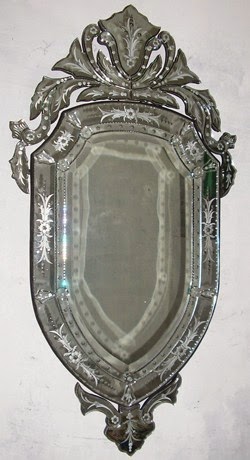
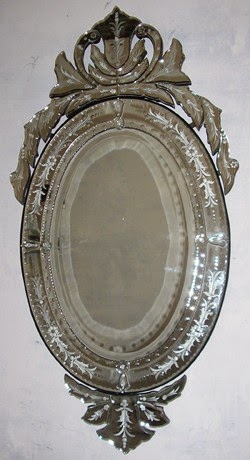
situation. While many Venetian mirrors are produced in a classic oval shape, you'll also find rectangular shapes, octagons, and even mirrors with elaborate crested designs at their tops. In addition to beveled and etched patterns, you'll frequently see gold highlights, floral and leaf designs, and even sweet rosettes on these artistic treasures.

A classic look for a formal living or dining room involves positioning a statement mirror on a prominent wall. In a dining room, a beautiful Venetian glass mirror can reflect the soft light from the chandelier and enhance the ambiance of a meal with family and friends. In a living room, the intricate hand-crafted beauty of a Venetian glass mirror is right at home serving as a decorative artistic treasure.

But don't think that a statement mirror must be confined to the formal rooms within your home. In a hallway, a Venetian mirror opens up a dark area and provides interest and excitement. A Venetian mirror in the bedroom provides subtle elegance and style, and even a bathroom can be beautifully glammed up with the addition of one of these Venetian glass masterpieces

Çontact Us
Address : Jln. Bonang 3 RT 2 RW 2, Joyotakan, Serengan, Surakarta, Jawa Tengah, Indonesia, Indonesia 57157Owner : Prima Warsa BaruPhone :  +62 888 6 827 827Email : sales@jagomerahcraft.comFanpage Facebook : jagomerahcraft
Rabu, 03 September 2014

Awesome Mirror


Awesome Mirror, amazing mirror, beautiful mirror

Awesome Mirror __ The Venetian mirror was born on the tiny Italian island of Murano in Venice in the 15th century. Venetian mirrors were painstakingly produced and creating one was a highly involved process. Upon completion, Venetian mirrors were considered to be masterpieces of art; the beauty of Venetian mirrors surpassed the expectations of what a mirror should be.

Even with the arrival of the 16th century, Venetian mirrors were rarities, and the majority of them were custom made for royalty and nobles with voracious appetites for collecting Venetian mirrors. Because the demand for Venetian mirrors surpassed the supply, it became possible to purchase replicas, or "Venetian style mirrors", from dealers who specialized in upscale, valuable objects. Authentic Venetian mirrors were set in precious frames made of beveled glass borders skillfully adjusted securely into place with metal screws and could only be purchased from Venice, Italy. Thoroughly beautiful, genuine Venetian mirrors were difficult to acquire.

Venetian mirrors, the purest mirrors in the world, set the bar very high for other mirror manufacturers. The Venetian mirrors dominated the industry; the authentic Venetian mirrors' popularity wiped out all competitive initiatives from abroad. The quality and the proportion of the Venetian mirrors and their components, combined with the Venetian artists' hundreds of years of crafting experience, made the island of Murano an extremely formidable opponent in the mirror making industry.

One reason the Venetian mirrors were considered so elusively beautiful was due to the top secret manufacturing procedures developed by the Murano glass artisans. The Venetian glassmakers perfected the mystical gold dust technique: they inserted gold leaf into the glass prior to the solidification process, leaving the gold leaf imbedded into the mirror's glass. Protected forever, the gold leaf added color and eternal sparkle to the Venetian mirror.

Another highly protected manufacturing secret was the "Lattimo" process. Lattimo is the name given for the translucent milky-white glass. This technique involves the use of lead to color the glass. Over time, Venetian mirror makers perfected the this process and achieved the skills to necessary to manipulate a variety of effects within the glass. When artfully distributed throughout the glass, the Lattimo process breathed new life into the Venetian mirrors. Through the skillful manipulation of the golden dust technique and the lattimo technique together, the creation of such details like artful borders, flowers, and ribbons are possible

Çontact Us
Address : Jln. Bonang 3 RT 2 RW 2, Joyotakan, Serengan, Surakarta, Jawa Tengah, Indonesia, Indonesia 57157Owner : Prima Warsa BaruPhone :  +62 888 6 827 827Email : sales@jagomerahcraft.comFanpage Facebook : jagomerahcraft

spectacular mirror


spectacular mirror, amazing mirror, beautiful mirror

spectacular mirror __ Venetian mirror has a unique history, especially in Java. In earlier times the mirror is widely used as a repellent creature smooth and something that contains elements of magic. No wonder that around the 12th century much has been used mirror of this type. Moreover it turns out there is a story of superstition in Java that was already very well known about the mirrors. If the Mirror is in place in the living room and facing the door can eliminate the negative things that will go into our homes.

The mirror has been coveted since the ancient times, since humans first saw his reflection in a pond, river or lake. In a very civilized in the world, like Rome or Egypt, they use a more crude form to see the reflection of their image, by creating a mirror of materials such as bronze and metal. It can be long before we get more advanced and how to make glass-mirror. Prior to this, the word “mirror” represents material that has been formed in a way that allows users to see their shadows. Therefore, the Mirror is very expensive and difficult to get at the time.

However, in the modern era like today people look at the mirror has become a common part. Almost in every house must find a huge collection of designs and sizes. Therefore JAGO MERAH CRAFT transforms ordinary mirror into an attractive mirror designs. Already more than 5 years experience in the field of art-making Venetian mirrors. Now, in this modern era, Venetian mirrors have a lot to change the function. Of which only a vanity mirror, bathroom mirror, dressing mirror, bedroom mirror also can be an elegant interior design. Obviously with a relatively cheap price at this time.

Therefore, make sure Venetian mirror as one of the options to hanging on the walls of your home. Besides Venetian mirrors, JAGO MERAH CRAFT can also make furniture, mirrors antiques, antiques furniture mirrors, Wall mirrors, glass handicraft and all accessories. And You can get minimalist design, batik mirror design and modern design. This is below some question for explaining our company.

Çontact Us

Address : Jln. Bonang 3 RT 2 RW 2, Joyotakan, Serengan, Surakarta, Jawa Tengah, Indonesia, Indonesia 57157Owner : Prima Warsa BaruPhone :  +62 888 6 827 827Email : sales@jagomerahcraft.comFanpage Facebook : jagomerahcraft
Sabtu, 30 Agustus 2014

glass is awesome


glass is awesome, antique mirror, beautiful mirror

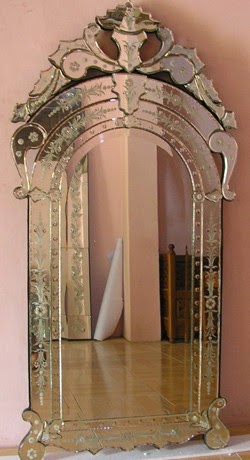
glass is awesome __ Venetian mirrors are the extraordinary elements that anyone who can afford to buy them can add in their rooms in order to enhance the elegance of their home. These mirrors are for sure would give more than hundred percent of the value for what you have bought them for. Also you can very happily enjoy the home environment created after furnishing your home with these mirrors. No other element can be compared with the beauty and the awesome ness that these mirrors posses and give out to you when used. These mirrors are incomparable. Offcourse these mirrors need the buyer to spend a penny or a two extra but still one can say that these are worth for what they are.

These mirrors are in most cases affordable by the upper class as the price range would be from thousand dollars to hundred thousand dollars. This would be the case for the original or the antique pieces that we get. But there are other type of Venetian mirrors that are available as the derivatives of Venetian mirrors. This doesn’t mean that they are the duplicate ones. These mirrors too are hand crafted by well trained artisans but of less cost. These kinds of mirrors are affordable by even a common man too. Really the one who owns these mirrors can only experience the real beauty of these mirrors. These gorgeous mirrors’s beauty cannot be defined or stated in words.

The Venetian mirrors have a history dated back since sixteenth century.The original pieces or the antique pieces are handcrafted in the home town of the Venetian mirrors that is in Italy. This is a place where you can find skilful artisans with ultimate talent in carving out mind blowing designs of Venetian mirrors. The mirror is mad to undergo various processes like etching wherein the glass is treated with acidic solutions in order to bring out the designs, designing the details in the mirror with hand by studding the mirror with precious stones and gems and gilding them and all such are done in order to bring out the beautiful, gorgeous and awesome Venetian mirror. Though you can get a derivative of Venetian mirror that can be obtained at any place on the earth but the look and feel of the antique Venetian mirror can never be reached. 

The Venetian mirrors are carried out from one generation to the next as a pride and hence it would always be better to have the original form of it. In the antique piece you can get artwork done by skilled gaffers belonging to Italy and hence you can be very sure of the beady. These are available in the market and also you can have them online. There are numerous online resources that would give you the information and display the models related to the antique pieces of Venetian mirrors. Just bring these awesome pieces to your home and enjoy the beauty of these mirrors along with the pride to possess the Venetian mirrors.  

Çontact Us
Address : Jln. Bonang 3 RT 2 RW 2, Joyotakan, Serengan, Surakarta, Jawa Tengah, Indonesia, Indonesia 57157Owner : Prima Warsa BaruPhone :  +62 888 6 827 827Email : sales@jagomerahcraft.comFanpage Facebook : jagomerahcraft

Kamis, 28 Agustus 2014

Unique glass


Unique glass, antique mirror, beautiful mirror

Unique glass __ Other types of reflecting device are also called "mirrors".

Acoustic mirrors are passive devices used to reflect and perhaps to focus sound waves. Acoustic mirrors were used for selective detection of sound waves, especially during World War II. They were used for detection of enemy aircraft prior to the development ofradar. Acoustic mirrors are used for remote probing of the atmosphere; they can be used to form a narrow diffraction-limited beam.They can also be used for underwater imaging.

Active mirrors are mirrors that amplify the light they reflect. They are used to make disk lasers. The amplification is typically over a narrow range of wavelengths, and requires an external source of power.

Atomic mirrors are devices which reflect matter waves. Usually, atomic mirrors work at grazing incidence. Such mirrors can be used for atomic interferometry and atomic holography. It has been proposed that they can be used for non-destructive imaging systems withnanometer resolution.

Cold mirrors are dielectric mirrors that reflect the entire visible light spectrum, while efficiently transmitting infrared wavelengths. These are the converse of hot mirrors.

Corner reflectors use three flat mirrors to reflect light back towards its source, they may also be implemented with prisms that reflect using total internal reflection that have no mirror surfaces. They are used for emergency location, and even laser ranging to the Moon.

Hot mirrors reflect infrared light while allowing visible light to pass. These can be used to separate useful light from unneeded infrared to reduce heating of components in an optical device. They can also be used as dichroic beamsplitters. (Hot mirrors are the converse of cold mirrors.)

Metallic reflectors are used to reflect infrared light (such as in space heaters or microwaves).

Non-reversing mirrors are mirrors that provide a non-reversed image of their subjects.

X-ray mirrors produce specular reflection of X-rays. All known types work only at angles near grazing incidence, and only a small fraction of the rays are reflected. See also X-ray optics.

Çontact Us

Address : Jln. Bonang 3 RT 2 RW 2, Joyotakan, Serengan, Surakarta, Jawa Tengah, Indonesia, Indonesia 57157Owner : Prima Warsa BaruPhone :  +62 888 6 827 827Email : sales@jagomerahcraft.comFanpage Facebook : jagomerahcraft

elegant glass


elegant glass, antique mirror, beautiful mirror

elegant glass __ Venetian mirrors were very popular since the 16th century. These mirrors were available to royal families only. As they were very expensive, they are not popular among common households. In the recent past, all kinds of people are able to use venetian mirrors as they are affordable and available in plenty of designs. They are being adorned because of their decorative nature. You will be able to use venetian mirror as a standalone décor piece as well. It can serve the decorative purpose without taking help of any accents or accessories.

Enhanced beauty
A venetian mirror comes with long lines and sweeping arches. The borders and edges are enhanced so that the mirror delivers flawless perfection. You can find venetian mirrors in different designs, shapes and sizes. The mirror will come with stylish edges and they will have ornamental value. A venetian mirror can be installed at any location in your home. It will fit into the bedroom, living room and bathroom.

You should remember the important fact about wall mirrors. They will create an illusion that you are living in a large space, even though the size of the room is very small. Hence, it is very much important to figure out the right location to install the mirror. Venetian mirrors come with magnificent rosettes, etched carvings and mirrored borders. Because of their beauty enhancing proportion, a venetian mirror will always be one of the weapons of an interior decorator. If you would like to go to a standalone mirror that propels the timeless art, venetian mirror is the best choice.

Collector’s choice
For collectors, venetian mirror is a great choice and an investment. The gorgeous decorative piece will bring remarkable change at any location of our home. The mirror is a functional aid as well as an artistic mastery. In addition to the intricate glass work, you can take advantage of the reflective nature of the mirror as well.
By installing one or more of Venetian mirrors at home, you can bring a touch of class and elegance to your home decoration. It is a great way to reflect your taste and style. In most of the homes, these mirrors are used as focal points. In order to prepare a venetian glass, sheets of blown glass will be used. The mirror will be decorated with blown glasses. In order to create great masterpieces of art, the pieces will be etched.
By using the etched glasses, different kinds of adornments and shapes are produced. Thus, the resulting mirror will be a stunning piece.

Unique mirrors are produced by beveling, polishing, cutting and etching them. Some simple mirrors will be made marvelous masterpieces by adding attachments and coloring of beveled edges. When you go for glass blowing, individual blown glasses will be attached together and versatile mirror will be prepared. Blown pieces of rosettes, flowers, trumpets and other creative designs will be attached to produce mind blowing master pieces. Even though original venetian mirrors are available in Venice, you can procure them through online as well.

Çontact Us
Address : Jln. Bonang 3 RT 2 RW 2, Joyotakan, Serengan, Surakarta, Jawa Tengah, Indonesia, Indonesia 57157Owner : Prima Warsa BaruPhone :  +62 888 6 827 827Email : sales@jagomerahcraft.comFanpage Facebook : jagomerahcraft

graceful mirror


graceful mirror, antique mirror, beautiful mirror

graceful mirror __ The 18th century saw the seeds of decay start to grow in Murano. Worker unrest at the closure of furnaces saw unemployment increase. As we have seen the decline in the importance of Venice as a trading and political power also meant it was less able to police its restrictive rules designed to protect its glass industry. Occupation by the French under Napoleon Bonaparte in 1797 and then the subsequent transfer of Venice to the Hapsburg Empire in 1814 brought the Venetian Republic to an end.
Glass production in Murano suffered enormously under Austrian rule as regulations were introduced which overtly favoured the other major glass making in the Empire, namely Bohemia. This saw Bohemian crystal, thicker, heavier and often engraved, grow in popularity to the point of rivalling Murano glass’ popularity the century before. Taxation of raw materials, limited markets, and the abolishment of the Guild in 1805 saw a sharp decline in the number of furnaces – down to 24 in 1800 which further shrank to 13 by 1820. Master glass makers were now scattered across Europe and the remaining Murano producers chose to focus on the decorative beads, small bottles, and trinkets needed for overseas colonial trade.
This decline did not bottom out until the mid 19th century with the establishment of a new family glass furnace on Murano, called Fratelli Tosco in 1854. This was followed by the arrival on the island of an industrial lawyer by the name of Antonio Salviati in 1859 who set up another furnace. Fratelli initially focused on utilitarian everyday glassware, whilst Salviati focused on producing glass tiles for both the repair of Venetian mosaics and the creation of new ones. The master glassblowers who gravitated towards these two firms were among the many who had kept the glassblowing traditions alive, maintaining the art of their fathers and grandfathers, rediscovering the ancient glass making techniques, including Lorenzo Radi, who had devoted considerable efforts in the 1850s to resurrecting some of the sophisticated glassmaking techniques from Murano’s first heyday in the 1400s. This steady reversal in fortunes was further aided by Vincenzo Zanetti who developed the Glass Museum of Murano, which in reality was more of a school which alongside the new furnaces slowly began reintroducing lost glass blowing techniques.
The output from the Salviati factory gained international recognition at both the London World Exhibition in 1862 and the Universal Exposition in Paris in 1867, in large part due to Antonio’s marketing abilities. At the London event his firm captured international attention with its prize-winning display with Salviati boldly using the occasion to present products in chalcedony glass, a medium that Radi had revived in 1856.
This recognition of artistic merit was paralleled by commercial success, and the firm soon inaugurated a sales office in London in 1868. These initiatives opened new markets for Venetian glass beyond those in the Hapsburg Empire. Eventually, Venice was freed from the Austrians in 1866 and became part of the Kingdom of Italy, and gradually the glassmaking industry of Murano began to expand commercially and many new innovative firms were established such as Fratelli Barovier and Francesco Ferro & Figlio.
Beyond drawing on the centuries old traditions of glass making in Murano, including the rediscovery of murrine, a glass making technique from Roman times, new influences were needed to re-inspire the industry. The Murano glass workers were constrained by the fact that they had always worked within an artisan tradition rather than an artistic one. This inspiration needed began with the art nouveau movement at the end of the centre, but was further fuelled and redirected by the avant garde reaction to this movement within the European art world. These new ideas and innovations from across Europe were evident for all to see at the 1895 Venice Biennale.
Çontact Us
Address : Jln. Bonang 3 RT 2 RW 2, Joyotakan, Serengan, Surakarta, Jawa Tengah, Indonesia, Indonesia 57157Owner : Prima Warsa BaruPhone :  +62 888 6 827 827Email : sales@jagomerahcraft.comFanpage Facebook : jagomerahcraft

Rabu, 27 Agustus 2014

decorative mirror


decorative mirror, antique mirror, beautiful mirror

decorative mirror __ A simple way to incorporate an elegant look into any room is the addition of an exquisite Venetian mirror. These treasured pieces reflect light and serve as an artistic focal point, transforming a room into a glamorous environment with a bit of old-world elegance.
Mirrors are helpful for checking your outfit one last time before you run out the door. But did you know that adding decorative mirrors to your home's decor is a great way to increase the amount of interior light? Or that mirrors can easily serve as an artistic element, as well? A mirror is much more than just a simple reflective surface, and the right mirror can make all the difference in the world.
The most elegant and prestigiousmirrors are made in Murano, Italy. Skilled craftsmen carefully create these works of art by hand, using techniques and secrets that have been passed down from one to another over many centuries of working with glass. Many Venetian mirrors that were hand-crafted centuries ago are still in existence, treasured by families who have enjoyed them from generation to generation.
Today's skilled Venetian glass craftsmen still use the time-proven artistic techniques to create elegant Venetian mirrors. From simple etched glass styles to more elaborate beveled or beaded designs, and with a wide variety of shapes and sizes, there's a Venetian glass mirrors for every 
decorating
 situation. While many Venetianmirrors are produced in a classic oval shape, you'll also find rectangular shapes, octagons, and even mirrors with elaborate crested designs at their tops. In addition to beveled and etched patterns, you'll frequently see gold highlights, floral and leaf designs, and even sweet rosettes on these artistic treasures.

A classic look for a formal living or dining room involves positioning a statement mirror on a prominent wall. In a dining room, a beautiful Venetian glass mirror can reflect the soft light from the chandelier and enhance the ambiance of a meal with family and friends. In a living room, the intricate hand-crafted beauty of a Venetian glass mirror is right at home serving as a decorative artistic treasure.

But don't think that a statement mirror must be confined to the formal rooms within your home. In a hallway, a Venetian mirror opens up a dark area and provides interest and excitement. A Venetian mirror in the bedroom provides subtle elegance and style, and even a bathroom can be beautifully glammed up with the addition of one of these Venetian glass masterpieces

Çontact Us
Address : Jln. Bonang 3 RT 2 RW 2, Joyotakan, Serengan, Surakarta, Jawa Tengah, Indonesia, Indonesia 57157Owner : Prima Warsa BaruPhone :  +62 888 6 827 827Email : sales@jagomerahcraft.comFanpage Facebook : jagomerahcraft

special mirror


special mirror, antique mirror, beautiful mirror

Venitian glass is a type of collectible glass that is also known by many as Murano glass. It received this name because it was primarily made on the island of Murano in Venice, Italy, during the mid-thirteenth century. Venetian glass is considered an art form and it is much desired and sought by both art and glass collectors. The advent of the Internet has made it possible for people to collect Venetian glass without ever having to leave home.

History
Many glassworkers fled to Venice during the Fourth Crusade when Constantinople was attacked. This happened again in 1453 when Constantinople was taken by the Ottomans. These Venetian artists mastered control over the transparency and color of glass, as well as decorating techniques, by the 16th century and Murano became the reputed center of glassmaking. Glassmaking artisans eventually became the prominent citizens of Murano. Their great glass artistry gained them immunity from prosecution, the availability of prospective brides from Venice, and the permission to wear swords.
Process
Making Venetian glass was a complex process. The glass was made out of silica. The silica turned to liquid when it was exposed to extreme temperatures. As the glass went from a liquid state to a solid state, there was a period of time when the glass completely hardened. It is during this time when the artisans shaped the material. Other materials used to make the glass included nitrate, arsenic and coloring.

Techniques and Colors
Depending on what the artisan wanted to produce, the materials, techniques and colors that were used varied. For instance, an aquamarine glass was created using copper and cobalt compounds added to the mix, and an artist wanting to produce a red piece of glass would use a gold solution. Techniques that were employed in Venetian glass making included gold engraving, enamel painting, engraving, ribbed glass and more.
Tools
Venetian glass artists used tools that were specialized specifically for glass work and art. These tools included pliers and tongs that were used to hand-form the hot glass, an iron rod that where the glass was attached so the artisan could add the finishing touches, cutting clippers and the work bench.
Benefits
Owning a piece of Venetian glass is considered more than just glass collecting, it's a form of art and history collecting. Venetian glass is all about the history of the glass, as it was truly the first type of clear glass that was ever produced.

Çontact Us
Address : Jln. Bonang 3 RT 2 RW 2, Joyotakan, Serengan, Surakarta, Jawa Tengah, Indonesia, Indonesia 57157Owner : Prima Warsa BaruPhone :  +62 888 6 827 827Email : sales@jagomerahcraft.comFanpage Facebook : jagomerahcraft
Selasa, 26 Agustus 2014

handicraft


handicraft, antique mirror, beautiful mirror

handicraft __ A mirror is an object that has at least one of its surfaces being reflective in nature. The first ‘mirrors’ were created using obsidian, a type of volcanic glass, in 6000BC. It is only during the early renaissance period that mirrors as we know them started being made in Europe, whereby glass was coated using a combination of tin and mercury. From then onwards, better quality mirrors have been made in many different styles.

Venetian mirrors are highly regarded works of art that were first produced in early 16th century Venice; they are currently produced on the island of Murano. The origins of the Venetian mirror date back to the Renaissance when Venice already excelled in the production of mirrors and other skills in glassmaking.These mirrors are crafted in fourteen separate stages including faceting of the glass, the engraving of various designs like fruiting vines and scroll motifs, and a traditional silvering process.

Venetian mirrors are widely regarded as being the most stylish and elegant.Venetian mirrors have the power to enhance the space in an elegant style. This piece of art works like a jewelry for homes. Being the pioneers, Jago Merah Craft produces extremely high quality Venetian mirrors. Popularly known for handcrafted mirrors, brilliance of colours and their precision of engraving, grinding and finishing.

Venetian mirrors are available in various designs and dimensions. A range of furniture and artefacts are also available in Venetian mirrors. With constant efforts, brilliant idea and with the help of technology, Jago Merah Craft glassmakers have come to design and produce the ‘future of Venetian Mirrors’

Çontact Us
Address : Jln. Bonang 3 RT 2 RW 2, Joyotakan, Serengan, Surakarta, Jawa Tengah, Indonesia, Indonesia 57157Owner : Prima Warsa BaruPhone :  +62 888 6 827 827Email : sales@jagomerahcraft.comFanpage Facebook : jagomerahcraft

venetian


venetian, special mirror, beautiful mirror

venetian __ In ancient times, people used obsidian stones to make mirrors. These stones when highly polished were able to reflect with a great clarity. Through times, as civilization evolved, technology did too. Gradually, people started to use gold, silver, and aluminum to create mirrors in the similar manner they used the obsidian stone. In about 1600 AD, the silvering process, which became the most popular way to make mirrors, was introduced and it is used even today.

In classical antiquity, solid metal (bronze, later silver) was used to manufacture mirrors and mirrors were too expensive; they were also prone to corrosion.

Venetian glassmakers introduced the process of making mirrors out of plate in 16th century. They covered the back of the glass with mercury to obtain near-perfect and undistorted reflection.

Today, the mirror substrate is first shaped, then polished and cleaned, and finally covered.

The method of making mirrors is very simple. Mirrors are made by applying a reflective coating to a glass sheets. Glass is a major mirror component due to its transparency, ease to fabrication, rigidity, hardness, and ability to take a smooth finish but it is not very good material for reflection. Materials which are commonly used are metal coatings such as silver, gold or chrome. Present-day glass mirrors are most often coated with non-toxic silver or aluminum.

It is very important that the glass is polished to perfection, any dip or impurity left on glass would made waves in the mirror, which would cause distortion of the image reflected.

There are many methods of glass to be coated with the chosen metal to form a mirror. In industrial productions, glass is coated by bringing the metal to a boil in special chambers and then metal is condensed on the glass sheet to form a thin but perfect coating of the metal. The back surface of the mirror is painted to prevent damage to the metal coating.

Mirrors have to be specially designed in order to become effective, and the glass sheets that are used must be flat and durable. For household use, the thickness of the mirror is very important, with its strength increasing proportionately to its thickness. For heavy-duty mirrors and mirrors used in scientific research, the surface needs to be designed in particular way to retain uniformity while adding a curvature. This process gives the mirror the ability to focus as well as reflect light. The kind of coating to be used is specified by the mirror design. Durability and reflectivity are the most important characteristics in the choice of the coating.
An important part of the manufacturing process is the quality control of mirrors. Inspection of the mirror's surface is generally performed using the naked eye or a microscope in order to check if there are any scratches

Çontact Us
Address : Jln. Bonang 3 RT 2 RW 2, Joyotakan, Serengan, Surakarta, Jawa Tengah, Indonesia, Indonesia 57157Owner : Prima Warsa BaruPhone :  +62 888 6 827 827Email : sales@jagomerahcraft.comFanpage Facebook : jagomerahcraft
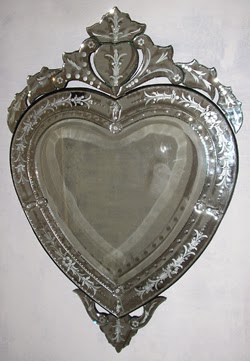
antique mirror


antique mirror, beautiful mirror, special mirror

antique mirror __ The first mirrors used by people were most likely pools of dark, still water, or water collected in a primitive vessel of some sort. The earliest manufactured mirrors were pieces of polished stone such as obsidian, a naturally occurring volcanic glass. Examples of obsidian mirrors found in Anatolia (modern-day Turkey) have been dated to around 6000 BC. Polished stone mirrors from Central and South America date from around 2000 BC onwards Mirrors of polished copper were crafted in Mesopotamia from 4000 BC, and in ancient Egypt from around 3000 BC. In China, bronze mirrors were manufactured from around 2000 BC, some of the earliest bronze and copper examples being produced by the Qijia culture. Mirrors made of other metal mixtures (alloys) such as copper and tin speculum metal may have also been produced in China and India. Mirrors of speculum metal or any precious metal were hard to produce and were only owned by the wealthy.

Metal-coated glass mirrors are said to have been invented in Sidon (modern-day Lebanon) in the first century AD, and glass mirrors backed with gold leaf are mentioned by the Roman author Pliny in his Natural History, written in about 77 AD. The Romans also developed a technique for creating crude mirrors by coating blown glass with molten lead.

Parabolic mirrors were described and studied in classical antiquity by the mathematician Diocles in his work On Burning Mirrors. Ptolemyconducted a number of experiments with curved polished iron mirrors, and discussed plane, convex spherical, and concave spherical mirrors in his Optics. Parabolic mirrors were also described by the physicist Ibn Sahl in the 10th century, and Ibn al-Haythamdiscussed concave and convex mirrors in both cylindrical and spherical geometries, carried out a number of experiments with mirrors, and solved the problem of finding the point on a convex mirror at which a ray coming from one point is reflected to another point. By the 11th century, clear glass mirrors were being produced in Moorish Spain.

In China, people began making mirrors with the use of silver-mercury amalgams as early as 500 AD.Some time during the earlyRenaissance, European manufacturers perfected a superior method of coating glass with a tin-mercury amalgam. The exact date and location of the discovery is unknown, but in the 16th century, Venice, a city famed for its glass-making expertise, became a centre of mirror production using this new technique. Glass mirrors from this period were extremely expensive luxuries. The Saint-Gobain factory, founded by royal initiative in France, was an important manufacturer, and Bohemian and German glass, often rather cheaper, was also important.

The invention of the silvered-glass mirror is credited to German chemist Justus von Liebig in 1835. His process involved the deposition of a thin layer of metallic silver onto glass through the chemical reduction of silver nitrate. This silvering process was adapted for mass manufacturing and led to the greater availability of affordable mirrors. Nowadays, mirrors are often produced by the wet deposition of silver (or sometimes aluminum via vacuum deposition) directly onto the glass substrate.

Çontact Us

Address : Jln. Bonang 3 RT 2 RW 2, Joyotakan, Serengan, Surakarta, Jawa Tengah, Indonesia, Indonesia 57157Owner : Prima Warsa BaruPhone :  +62 888 6 827 827Email : sales@jagomerahcraft.comFanpage Facebook : jagomerahcraft