Tampilkan postingan dengan label decorative mirror. Tampilkan semua postingan

Jumat, 26 September 2014

interesting mirror bedroom


interesting mirror bedroom, duplicate special mirror, decorative mirror

interesting mirror bedroom __ Venetian glass production dates back to 982, with a document that makes reference to a bottle maker called Dominicus Phiolarius (from it. fiole: bottles). In 1090 a Petrus Flabianicus was also mentioned. But already in 450, in the Venetian lagoon and in the surroundings there were glass-workers that produced the tesseras for the mosaics of the local churches. However, no Venetian glass preceding the XVth century has arrived to us, while the glass of the Islamic art arrived to Venice from Constantinopole after the IVth Crusade (1204), is kept in the Treasure of St. Mark. 

The development of Venetian glass factories was quick: in 1271 a first “capitulary” was introduced to regulate the art of glass making. The importation of foreign glass into Venice was forbidden and foreign glass makers were prevented from working in the city. The Guild of glass makers was under the authority and protection of the Republic, and their formulas were highly valued and kept strictly secret. These “partite” or recipes, were handed down from father to son and transcribed into secret books. In fact these secret techniques were of such great importance as to make the difference between the glass produced in Venice and that of other European glass centres. 

In 1291 in order to counter the risk of fire, all of the furnaces of Venice were moved to the island of Murano, where the art of glass has been kept alive (till today). In 1295 another strict "capitulary" was issued: in it the emigration of Venetian glass makers abroad was forbidden. 

The continuous development of glass industry and art in Murano required a modification of the statutes of 1271 which led up to the “Mariegola dell’arte dei verieri da Muran”, in 1441. Venice got an indirect knowledge of “enamelled” glass of Syrian origins that influenced enormously the creation of those goblets and stem glasses with enamel decoration that date back to the XIVth and XVth century, like Aldrevandin’s glass and the one kept in Switzerland in the Cathedral of Coira. 

The decoration of Venetian glass was also influenced by the craftsmen arrived from the Middle East, after the Fall of Damascus in 1400 and of Constantinopoles in 1435, which closed definively the history of the Roman Empire.Towards the half of the XVth century, above all because of these external influences, the production of glass with dark colours decorated and painted with bright coloured enamel was successful. 

At the mid of the XVth century, a perfect clear, flawless glass was produced by Angelo Barovier which became called “vetro cristallo” or "cristallo veneziano". The chemical composition of this kind of glass allowed complex and long works typical of the Murano tradition. The Venetian factories that made goblets, glasses, dishes, bowls etc., exported their objects all around Europe, where the elegance and lightness of this material was appreciated.

Venice kept protecting the secret of the production of glass and of crystal but, notwithstanding it, the Republic partially lost its monopoly at the end of the XVIth century, because of some glass makers (e.g. Verzelini) who let the secret be known in many European countries. Venice reacted to this competition producing more and more original objects, with fancier and more exuberant decorations: glasses and goblets with handles and decorated by figures of animals, “acquerecce” and “versatoi” (jugs and ewers) ship-shaped, entirely made of glass, fruit-stands supported and decorated by serpents, dragons, sea-horses, dolphins.

In the XVIth century the quest for new materials led to the realization of an opaque white glass called "lattimo" (from it. latte: milk). Subsequently the "filigree" and the "retorti" glass were created; in 1527 Filippo Catani patented the "zanfirico" (or "retorti") filigree with milky canes included in cristal and twisted as spiral. Those techniques represent a simbol of the classic Murano glass till today. 

Towards the end of the XVIIth century and in the XVIIIth, the production of mirrors imposed itself: mirrors were all pretty small, because they were made out of sheets of blown glass, unlike those of other countries which were melted in big surfaces and then polished. These mirrors were decorated with cut figures or enriched by big glass frames or with coloured glass applications. 

In the XVIIIth century there was the rise of Giuseppe Briati’s industry: he created the a ciocche chandelier. As consequence of the political collapse with the fall of the Republic, the economic crisis and the foreign dominations, between the end of the XVIIIth century and the mid of XIXth didn’t produce anything new in the artistic field, and the glass factories were content with the production of beads for necklaces and rosaries.

It is in 1840 Pietro Bigaglia breathed new life into the art glass production, also creating the innovating millefiori paperweight. With the end of the XIXth century, Murano re-started pratice of art glass, reviving the tecniques of its past. During this part of the century was born a new generation of master glassmakers focused to re-lerning the manual and technical skills which until just a few years before might seemed lost. 

In the following century some glass factories led by craftsmen or industrialists like Venini, Barovier, Salviati, Toso, Cenedese, Barbini (and many others)., abandoned the repetitive production, which used to copy the shapes of the past, to create a big variety of artistic glass upon new designs, thanks to innovative contemporary artists.

Çontact Us
Address : Jln. Bonang 3 RT 2 RW 2, Joyotakan, Serengan, Surakarta, Jawa Tengah, Indonesia, Indonesia 57157Owner : Prima Warsa BaruPhone :  +62 888 6 827 827Email : sales@jagomerahcraft.comFanpage Facebook : jagomerahcraft

Selasa, 23 September 2014

unique mirror frames


unique mirror frames, beautiful mirror, decorative mirror

unique mirror frames __ Venitian glass is a type of collectible glass that is also known by many as Murano glass. It received this name because it was primarily made on the island of Murano in Venice, Italy, during the mid-thirteenth century. Venetian glass is considered an art form and it is much desired and sought by both art and glass collectors. The advent of the Internet has made it possible for people to collect Venetian glass without ever having to leave home.

History
Many glassworkers fled to Venice during the Fourth Crusade when Constantinople was attacked. This happened again in 1453 when Constantinople was taken by the Ottomans. These Venetian artists mastered control over the transparency and color of glass, as well as decorating techniques, by the 16th century and Murano became the reputed center of glassmaking. Glassmaking artisans eventually became the prominent citizens of Murano. Their great glass artistry gained them immunity from prosecution, the availability of prospective brides from Venice, and the permission to wear swords.
Process
Making Venetian glass was a complex process. The glass was made out of silica. The silica turned to liquid when it was exposed to extreme temperatures. As the glass went from a liquid state to a solid state, there was a period of time when the glass completely hardened. It is during this time when the artisans shaped the material. Other materials used to make the glass included nitrate, arsenic and coloring.

Techniques and Colors
Depending on what the artisan wanted to produce, the materials, techniques and colors that were used varied. For instance, an aquamarine glass was created using copper and cobalt compounds added to the mix, and an artist wanting to produce a red piece of glass would use a gold solution. Techniques that were employed in Venetian glass making included gold engraving, enamel painting, engraving, ribbed glass and more.
Tools
Venetian glass artists used tools that were specialized specifically for glass work and art. These tools included pliers and tongs that were used to hand-form the hot glass, an iron rod that where the glass was attached so the artisan could add the finishing touches, cutting clippers and the work bench.
Benefits
Owning a piece of Venetian glass is considered more than just glass collecting, it's a form of art and history collecting. Venetian glass is all about the history of the glass, as it was truly the first type of clear glass that was ever produced.

Çontact Us
Address : Jln. Bonang 3 RT 2 RW 2, Joyotakan, Serengan, Surakarta, Jawa Tengah, Indonesia, Indonesia 57157Owner : Prima Warsa BaruPhone :  +62 888 6 827 827Email : sales@jagomerahcraft.comFanpage Facebook : jagomerahcraft

Minggu, 07 September 2014

interisting glass


interisting glass, beautiful mirror, decorative mirror

interisting glass __ Venetian glass is a method of glass production developed and refined over many centuries in Venice, Italy, primarily on the island of Murano. It remains a world-renowned centre for colourful, elaborate glass of the highest quality and craftsmanship – be it in glassware, mirrors, chandeliers, or beads and jewellery. This guide to the history of Venetian glass manufacture can be read in conjunction with our Glossary of Venetian Glass Making Processes which describes in more detail the processes discussed below, some of the science involved, and who a technique or process can be attributed to.

Early Origins of Venetian Glass
The first documented record of Venetian glass production dates back to 982 and references a Master phial and bottle maker named Dominicus Phiolarius. A further reference in 1090 mentions a Petrus Flabianicus (or Peter of the Flacons), involved in the same activity. However, pre-dating this documentary evidence, by some 450 years, archaeological discoveries made in the 1960s suggest the presence of glass workers and furnaces in the Venetian lagoon, centred around the island of Torcello and also Aquileia on the mainland. These sites appeared to be primarily focused on producing glass tesserae (from the Greek meaning ‘four-sided’) which were small glass or stone squares used as mosaic tiles for decorative purposes, possibly to be used in local churches or the villas of wealthy noblemen. This process harks back to far earlier production techniques from the Roman Empire when moulded glass was used to bring light into bathhouses.

Several centuries were to pass before the artisans of the Venetian area embarked on what was to become a fully-fledged and unique period of decorative glass production, evolving over time to reach world renown and for a period a virtual monopoly industry in Europe.

This shift in emphasis was largely due to Venice’s growing status as a cultural bridge between the west and the east. This was based on its geographic location on the Adriatic – facing the Balkans, and with the Middle East and Asia to the south and east respectively; the fact it was strategically well appointed on a series of islands with a strong navy and merchant fleet; and had a basic devotion to trade, and the power and influence that trade brought them. This role was initially focused on those countries bordering the Mediterranean, but also embodied the Holy Lands and the Orient. In war and peace the Republic of Venice focused on commercial advantage be it negotiating exemption from duties when trading in Byzantium in the 11th century, or the creation of trading bases, or protected ‘colonies’, in the Holy Land and Central Asia in the early 12th century. This policy was to give the Republic of Venice near monopoly status in glass production across Europe for some 300 years.

As hinted at above, glassmaking was very much an Eastern skill, and glass-making traditions were already well established in many countries in the Middle East, including Egypt, Palestine and Syria. Although Venice was influential in these regions, Islamic glass didn’t have any great presence in Venice until the capture of Constantinople in 1204 by the Crusaders on their 4th Crusade. This resulted in an influx of fleeing Byzantine glassmakers into Venice bringing with them skills and techniques that were totally new to Europe. By the end of the century, Venetian glassmakers had adapted many of these imported processes, alongside their own, to obtain unique results. This influx of techniques was to be repeated again in 1453 when Constantinople fell to the Ottomans.

Political and commercial expediency then played an important part in ensuring that these techniques were retained within Venice and production was regulated to maintain a competitive advantage. In 1271 a legislative edict (or capitulary) was declared with the sole intention of regulating the art of glass making for the purposes of commercial advantage. From this point forward the importation of foreign glasswork into Venice was forbidden and foreign glassmakers were prevented from working in the city.

In 1291 the small independent art glass factories that were now starting to flourish in Venice, in particular around Rivo Alto and Dorsoduro, were moved across the lagoon to the island of Murano where they were to remain to this day. This was enforced relocation was ordered by the Maggior Consiglio or Great Council. During the Middle Ages and the Renaissance period this was a political organ of the Republic of Venice, made up of adult males from the aristocracy with a life long hereditary right to sit on the council. It functioned mainly as a pool from which members could be drawn for other councils and committees of State, such as the Senate, and the more secretive Council of Ten (established 1310), all under the chairmanship of the Doge.

Çontact Us
Address : Jln. Bonang 3 RT 2 RW 2, Joyotakan, Serengan, Surakarta, Jawa Tengah, Indonesia, Indonesia 57157Owner : Prima Warsa BaruPhone :  +62 888 6 827 827Email : sales@jagomerahcraft.comFanpage Facebook : jagomerahcraft

interisting mirror


interisting mirror, decorative mirror, interior mirror

interisting mirror __ Venetian mirrors were very popular since the 16th century. These mirrors were available to royal families only. As they were very expensive, they are not popular among common households. In the recent past, all kinds of people are able to use venetian mirrors as they are affordable and available in plenty of designs. They are being adorned because of their decorative nature. You will be able to use venetian mirror as a standalone décor piece as well. It can serve the decorative purpose without taking help of any accents or accessories.

Enhanced beauty
A venetian mirror comes with long lines and sweeping arches. The borders and edges are enhanced so that the mirror delivers flawless perfection. You can find venetian mirrors in different designs, shapes and sizes. The mirror will come with stylish edges and they will have ornamental value. A venetian mirror can be installed at any location in your home. It will fit into the bedroom, living room and bathroom.

You should remember the important fact about wall mirrors. They will create an illusion that you are living in a large space, even though the size of the room is very small. Hence, it is very much important to figure out the right location to install the mirror. Venetian mirrors come with magnificent rosettes, etched carvings and mirrored borders. Because of their beauty enhancing proportion, a venetian mirror will always be one of the weapons of an interior decorator. If you would like to go to a standalone mirror that propels the timeless art, venetian mirror is the best choice.

Collector’s choice
For collectors, venetian mirror is a great choice and an investment. The gorgeous decorative piece will bring remarkable change at any location of our home. The mirror is a functional aid as well as an artistic mastery. In addition to the intricate glass work, you can take advantage of the reflective nature of the mirror as well.
By installing one or more of Venetian mirrors at home, you can bring a touch of class and elegance to your home decoration. It is a great way to reflect your taste and style. In most of the homes, these mirrors are used as focal points. In order to prepare a venetian glass, sheets of blown glass will be used. The mirror will be decorated with blown glasses. In order to create great masterpieces of art, the pieces will be etched.

By using the etched glasses, different kinds of adornments and shapes are produced. Thus, the resulting mirror will be a stunning piece. Unique mirrors are produced by beveling, polishing, cutting and etching them. Some simple mirrors will be made marvelous masterpieces by adding attachments and coloring of beveled edges. When you go for glass blowing, individual blown glasses will be attached together and versatile mirror will be prepared. Blown pieces of rosettes, flowers, trumpets and other creative designs will be attached to produce mind blowing master pieces. Even though original venetian mirrors are available in Venice, you can procure them through online as well.

Çontact Us
Address : Jln. Bonang 3 RT 2 RW 2, Joyotakan, Serengan, Surakarta, Jawa Tengah, Indonesia, Indonesia 57157Owner : Prima Warsa BaruPhone :  +62 888 6 827 827Email : sales@jagomerahcraft.comFanpage Facebook : jagomerahcraft

unique mirror


unique mirror, amazing mirror, decorative mirror

unique mirror __ The 18th century saw the seeds of decay start to grow in Murano. Worker unrest at the closure of furnaces saw unemployment increase. As we have seen the decline in the importance of Venice as a trading and political power also meant it was less able to police its restrictive rules designed to protect its glass industry. Occupation by the French under Napoleon Bonaparte in 1797 and then the subsequent transfer of Venice to the Hapsburg Empire in 1814 brought the Venetian Republic to an end.

Glass production in Murano suffered enormously under Austrian rule as regulations were introduced which overtly favoured the other major glass making in the Empire, namely Bohemia. This saw Bohemian crystal, thicker, heavier and often engraved, grow in popularity to the point of rivalling Murano glass’ popularity the century before. Taxation of raw materials, limited markets, and the abolishment of the Guild in 1805 saw a sharp decline in the number of furnaces – down to 24 in 1800 which further shrank to 13 by 1820. Master glass makers were now scattered across Europe and the remaining Murano producers chose to focus on the decorative beads, small bottles, and trinkets needed for overseas colonial trade.

This decline did not bottom out until the mid 19th century with the establishment of a new family glass furnace on Murano, called Fratelli Tosco in 1854. This was followed by the arrival on the island of an industrial lawyer by the name of Antonio Salviati in 1859 who set up another furnace. Fratelli initially focused on utilitarian everyday glassware, whilst Salviati focused on producing glass tiles for both the repair of Venetian mosaics and the creation of new ones. The master glassblowers who gravitated towards these two firms were among the many who had kept the glassblowing traditions alive, maintaining the art of their fathers and grandfathers, rediscovering the ancient glass making techniques, including Lorenzo Radi, who had devoted considerable efforts in the 1850s to resurrecting some of the sophisticated glassmaking techniques from Murano’s first heyday in the 1400s. This steady reversal in fortunes was further aided by Vincenzo Zanetti who developed the Glass Museum of Murano, which in reality was more of a school which alongside the new furnaces slowly began reintroducing lost glass blowing techniques.

The output from the Salviati factory gained international recognition at both the London World Exhibition in 1862 and the Universal Exposition in Paris in 1867, in large part due to Antonio’s marketing abilities. At the London event his firm captured international attention with its prize-winning display with Salviati boldly using the occasion to present products in chalcedony glass, a medium that Radi had revived in 1856.

This recognition of artistic merit was paralleled by commercial success, and the firm soon inaugurated a sales office in London in 1868. These initiatives opened new markets for Venetian glass beyond those in the Hapsburg Empire. Eventually, Venice was freed from the Austrians in 1866 and became part of the Kingdom of Italy, and gradually the glassmaking industry of Murano began to expand commercially and many new innovative firms were established such as Fratelli Barovier and Francesco Ferro & Figlio.

Beyond drawing on the centuries old traditions of glass making in Murano, including the rediscovery of murrine, a glass making technique from Roman times, new influences were needed to re-inspire the industry. The Murano glass workers were constrained by the fact that they had always worked within an artisan tradition rather than an artistic one. This inspiration needed began with the art nouveau movement at the end of the centre, but was further fuelled and redirected by the avant garde reaction to this movement within the European art world. These new ideas and innovations from across Europe were evident for all to see at the 1895 Venice Biennale.

This had the effect of stretching the ideas of the glassmakers, who began to form informal groups to discuss and exchange artistic ideas. One such group, associated with Cà Pesaro and the Bevilacqua La Masa Foundation, included a number of artists who would bring new design ideas to the Murano glassmakers. Prominent among them being Vittorio Zecchin, Napoleone Martinuzzi, Hans Stoltenberg-Lerche and Teodoro Wolf-Ferrari. The scene was now set for the 20th century to be a new Golden Age for Venetian glass.

Çontact Us

Address : Jln. Bonang 3 RT 2 RW 2, Joyotakan, Serengan, Surakarta, Jawa Tengah, Indonesia, Indonesia 57157Owner : Prima Warsa BaruPhone :  +62 888 6 827 827Email : sales@jagomerahcraft.comFanpage Facebook : jagomerahcraft

Sabtu, 30 Agustus 2014

decorative mirror


decorative mirror, amazing mirror, graceful mirror

decorative mirror __ This article is about wave reflectors (mainly, specular reflection of visible light). For other uses, see Mirror (disambiguation).
"Looking glass" redirects here. For other uses, see Looking Glass (disambiguation).

Barack Obama, the currentPresident of the United States, looks in a mirror before taking the oath of officeat the Capitol on 20 January 2009.

A first surface mirror coated with aluminum and enhanced with dielectric coatings. The mirror was constructed from an optical flat with a flatness of  /20, which equates to a surface deviation less than 31.6 nanometers.

A mirror is an object that reflects light in a way that preserves much of its original quality subsequent to its contact with the mirror.

Some mirrors also filter out some wavelengths, while preserving other wavelengths in the reflection. This is different from other light-reflecting objects that do not preserve much of the original wave signal other than color and diffuse reflected light. The most familiar type of mirror is the plane mirror, which has a flat surface. Curved mirrors are also used, to produce magnified or diminished images or focus light or simply distort the reflected image.

Mirrors are commonly used for personal grooming or admiring oneself (in which case the archaic term looking-glass is sometimes still used[clarification needed]), decoration, and architecture. Mirrors are also used in scientific apparatus such as telescopes and lasers, cameras, and industrial machinery. Most mirrors are designed for visible light; however, mirrors designed for other types of waves or otherwavelengths of electromagnetic radiation are also used, especially in non-optical instruments

Çontact Us
Address : Jln. Bonang 3 RT 2 RW 2, Joyotakan, Serengan, Surakarta, Jawa Tengah, Indonesia, Indonesia 57157Owner : Prima Warsa BaruPhone :  +62 888 6 827 827Email : sales@jagomerahcraft.comFanpage Facebook : jagomerahcraft
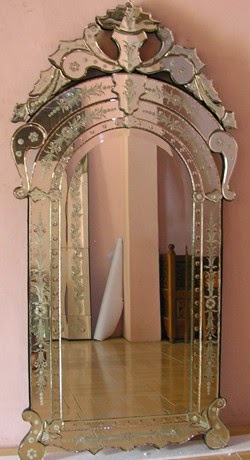
amazing mirror


amazing mirror, glass is awesome, decorative mirror

amazing mirror __A mirror is an object that has at least one of its surfaces being reflective in nature. The first ‘mirrors’ were created using obsidian, a type of volcanic glass, in 6000BC. It is only during the early renaissance period that mirrors as we know them started being made in Europe, whereby glass was coated using a combination of tin and mercury. From then onwards, better quality mirrors have been made in many different styles.

Venetian mirrors are highly regarded works of art that were first produced in early 16th century Venice; they are currently produced on the island of Murano. The origins of the Venetian mirror date back to the Renaissance when Venice already excelled in the production of mirrors and other skills in glassmaking.These mirrors are crafted in fourteen separate stages including faceting of the glass, the engraving of various designs like fruiting vines and scroll motifs, and a traditional silvering process.

Venetian mirrors are widely regarded as being the most stylish and elegant.Venetian mirrors have the power to enhance the space in an elegant style. This piece of art works like a jewelry for homes. Being the pioneers, Jago Merah Craft produces extremely high quality Venetian mirrors. Popularly known for handcrafted mirrors, brilliance of colours and their precision of engraving, grinding and finishing.

Venetian mirrors are available in various designs and dimensions. A range of furniture and artefacts are also available in Venetian mirrors. With constant efforts, brilliant idea and with the help of technology, Jago Merah Craft glassmakers have come to design and produce the ‘future of Venetian Mirrors’

Çontact Us

Address : Jln. Bonang 3 RT 2 RW 2, Joyotakan, Serengan, Surakarta, Jawa Tengah, Indonesia, Indonesia 57157Owner : Prima Warsa BaruPhone :  +62 888 6 827 827Email : sales@jagomerahcraft.comFanpage Facebook : jagomerahcraft

Rabu, 27 Agustus 2014

interior mirror

interior mirror, special mirror, decorative mirror
History Of The Enchanting Venetian Mirror
interior mirror __ Humans, it seems, have always been interested in their image, making crude mirrors of polished tin and other metals. Eventually, in Europe, glass was poured over polished metal to yield better forms of reflectors. During the medieval period, mirrors were considered a tool of the devil, as it was widely thought that Satan was watching from the other side. Glass mirrors disappeared, leaving people to check their appearance in bowls of water or a polished spoon.

As mirrors came back into fashion in the early 15th century, glassmaking and mirror making was burgeoning in Venice, Italy. Nestled among 117 sister islands in the canals of Venice, lies Murano, the birthplace of the famed Venetian Mirror. Murano, in the 15th century was known throughout Europe, for its high quality glassware, Venetian elegance, and beauty. Apart from the detailed craftsmanship of the artisans, the beauty of Venetian glass was attributed to the salt content of the ocean water used, the composition of the Italian silica, and the type of flame used for firing. It is said that the local hardwoods produced the perfect flame for producing exquisite glass pieces. Venetian glass makers fiercely guarded their techniques, but eventually crafty artists from France and Germany infiltrated the artist’s society, returning home to practice their new skills. Still, Venetian glass and mirrors remained a coveted and valuable entity, and one of the most costly items one could own, a true status symbol.


Today, over 500 years later, Venetian mirrors are just as beautiful and stylish, adding a tough of elegance to any home. Venetian mirrors reflect light, and project a lovely Venetian atmosphere. When combined with Venetian furniture, jewel toned drapes and tapestries, and plastered walls, a well-placed Venetian mirror can transform one’s home into a Venetian Renaissance villa. Venetian mirrors can be found in a multitude of styles, from art deco in appearance to those appearing to have been plucked straight from a wealthy Medici Venetian style home in 15th century Italy.

Çontact Us

Address : Jln. Bonang 3 RT 2 RW 2, Joyotakan, Serengan, Surakarta, Jawa Tengah, Indonesia, Indonesia 57157Owner : Prima Warsa BaruPhone :  +62 888 6 827 827Email : sales@jagomerahcraft.comFanpage Facebook : jagomerahcraft

decorative mirror


decorative mirror, antique mirror, beautiful mirror

decorative mirror __ A simple way to incorporate an elegant look into any room is the addition of an exquisite Venetian mirror. These treasured pieces reflect light and serve as an artistic focal point, transforming a room into a glamorous environment with a bit of old-world elegance.
Mirrors are helpful for checking your outfit one last time before you run out the door. But did you know that adding decorative mirrors to your home's decor is a great way to increase the amount of interior light? Or that mirrors can easily serve as an artistic element, as well? A mirror is much more than just a simple reflective surface, and the right mirror can make all the difference in the world.
The most elegant and prestigiousmirrors are made in Murano, Italy. Skilled craftsmen carefully create these works of art by hand, using techniques and secrets that have been passed down from one to another over many centuries of working with glass. Many Venetian mirrors that were hand-crafted centuries ago are still in existence, treasured by families who have enjoyed them from generation to generation.
Today's skilled Venetian glass craftsmen still use the time-proven artistic techniques to create elegant Venetian mirrors. From simple etched glass styles to more elaborate beveled or beaded designs, and with a wide variety of shapes and sizes, there's a Venetian glass mirrors for every 
decorating
 situation. While many Venetianmirrors are produced in a classic oval shape, you'll also find rectangular shapes, octagons, and even mirrors with elaborate crested designs at their tops. In addition to beveled and etched patterns, you'll frequently see gold highlights, floral and leaf designs, and even sweet rosettes on these artistic treasures.

A classic look for a formal living or dining room involves positioning a statement mirror on a prominent wall. In a dining room, a beautiful Venetian glass mirror can reflect the soft light from the chandelier and enhance the ambiance of a meal with family and friends. In a living room, the intricate hand-crafted beauty of a Venetian glass mirror is right at home serving as a decorative artistic treasure.

But don't think that a statement mirror must be confined to the formal rooms within your home. In a hallway, a Venetian mirror opens up a dark area and provides interest and excitement. A Venetian mirror in the bedroom provides subtle elegance and style, and even a bathroom can be beautifully glammed up with the addition of one of these Venetian glass masterpieces

Çontact Us
Address : Jln. Bonang 3 RT 2 RW 2, Joyotakan, Serengan, Surakarta, Jawa Tengah, Indonesia, Indonesia 57157Owner : Prima Warsa BaruPhone :  +62 888 6 827 827Email : sales@jagomerahcraft.comFanpage Facebook : jagomerahcraft