Tampilkan postingan dengan label Awesome Mirror. Tampilkan semua postingan

Selasa, 23 September 2014

unique mirrors for dining room


unique mirrors for dining room, amazing mirror, Awesome Mirror

unique mirrors for dining room __ The Venetian mirror was born on the tiny Italian island of Murano in Venice in the 15th century. Venetian mirrors were painstakingly produced and creating one was a highly involved process. Upon completion, Venetian mirrors were considered to be masterpieces of art; the beauty of Venetian mirrors surpassed the expectations of what a mirror should be.

Even with the arrival of the 16th century, Venetian mirrors were rarities, and the majority of them were custom made for royalty and nobles with voracious appetites for collecting Venetian mirrors. Because the demand for Venetian mirrors surpassed the supply, it became possible to purchase replicas, or "Venetian style mirrors", from dealers who specialized in upscale, valuable objects. Authentic Venetian mirrors were set in precious frames made of beveled glass borders skillfully adjusted securely into place with metal screws and could only be purchased from Venice, Italy. Thoroughly beautiful, genuine Venetian mirrors were difficult to acquire.

Venetian mirrors, the purest mirrors in the world, set the bar very high for other mirror manufacturers. The Venetian mirrors dominated the industry; the authentic Venetian mirrors' popularity wiped out all competitive initiatives from abroad. The quality and the proportion of the Venetian mirrors and their components, combined with the Venetian artists' hundreds of years of crafting experience, made the island of Murano an extremely formidable opponent in the mirror making industry.

One reason the Venetian mirrors were considered so elusively beautiful was due to the top secret manufacturing procedures developed by the Murano glass artisans. The Venetian glassmakers perfected the mystical gold dust technique: they inserted gold leaf into the glass prior to the solidification process, leaving the gold leaf imbedded into the mirror's glass. Protected forever, the gold leaf added color and eternal sparkle to the Venetian mirror.

Another highly protected manufacturing secret was the "Lattimo" process. Lattimo is the name given for the translucent milky-white glass. This technique involves the use of lead to color the glass. Over time, Venetian mirror makers perfected the this process and achieved the skills to necessary to manipulate a variety of effects within the glass. When artfully distributed throughout the glass, the Lattimo process breathed new life into the Venetian mirrors. Through the skillful manipulation of the golden dust technique and the lattimo technique together, the creation of such details like artful borders, flowers, and ribbons are possible

Çontact Us
Address : Jln. Bonang 3 RT 2 RW 2, Joyotakan, Serengan, Surakarta, Jawa Tengah, Indonesia, Indonesia 57157Owner : Prima Warsa BaruPhone :  +62 888 6 827 827Email : sales@jagomerahcraft.comFanpage Facebook : jagomerahcraft

Senin, 22 September 2014

special mirror caravan spiegels


special mirror caravan spiegels, amazing mirror, Awesome Mirror

special mirror caravan spiegels __ Venetian glass production dates back to 982, with a document that makes reference to a bottle maker called Dominicus Phiolarius (from it. fiole: bottles). In 1090 a Petrus Flabianicus was also mentioned. But already in 450, in the Venetian lagoon and in the surroundings there were glass-workers that produced the tesseras for the mosaics of the local churches. However, no Venetian glass preceding the XVth century has arrived to us, while the glass of the Islamic art arrived to Venice from Constantinopole after the IVth Crusade (1204), is kept in the Treasure of St. Mark. 

The development of Venetian glass factories was quick: in 1271 a first “capitulary” was introduced to regulate the art of glass making. The importation of foreign glass into Venice was forbidden and foreign glass makers were prevented from working in the city. The Guild of glass makers was under the authority and protection of the Republic, and their formulas were highly valued and kept strictly secret. These “partite” or recipes, were handed down from father to son and transcribed into secret books. In fact these secret techniques were of such great importance as to make the difference between the glass produced in Venice and that of other European glass centres. 

In 1291 in order to counter the risk of fire, all of the furnaces of Venice were moved to the island of Murano, where the art of glass has been kept alive (till today). In 1295 another strict "capitulary" was issued: in it the emigration of Venetian glass makers abroad was forbidden. 

The continuous development of glass industry and art in Murano required a modification of the statutes of 1271 which led up to the “Mariegola dell’arte dei verieri da Muran”, in 1441. Venice got an indirect knowledge of “enamelled” glass of Syrian origins that influenced enormously the creation of those goblets and stem glasses with enamel decoration that date back to the XIVth and XVth century, like Aldrevandin’s glass and the one kept in Switzerland in the Cathedral of Coira. 

The decoration of Venetian glass was also influenced by the craftsmen arrived from the Middle East, after the Fall of Damascus in 1400 and of Constantinopoles in 1435, which closed definively the history of the Roman Empire.Towards the half of the XVth century, above all because of these external influences, the production of glass with dark colours decorated and painted with bright coloured enamel was successful. 

At the mid of the XVth century, a perfect clear, flawless glass was produced by Angelo Barovier which became called “vetro cristallo” or "cristallo veneziano". The chemical composition of this kind of glass allowed complex and long works typical of the Murano tradition. The Venetian factories that made goblets, glasses, dishes, bowls etc., exported their objects all around Europe, where the elegance and lightness of this material was appreciated.

Venice kept protecting the secret of the production of glass and of crystal but, notwithstanding it, the Republic partially lost its monopoly at the end of the XVIth century, because of some glass makers (e.g. Verzelini) who let the secret be known in many European countries. Venice reacted to this competition producing more and more original objects, with fancier and more exuberant decorations: glasses and goblets with handles and decorated by figures of animals, “acquerecce” and “versatoi” (jugs and ewers) ship-shaped, entirely made of glass, fruit-stands supported and decorated by serpents, dragons, sea-horses, dolphins.

In the XVIth century the quest for new materials led to the realization of an opaque white glass called "lattimo" (from it. latte: milk). Subsequently the "filigree" and the "retorti" glass were created; in 1527 Filippo Catani patented the "zanfirico" (or "retorti") filigree with milky canes included in cristal and twisted as spiral. Those techniques represent a simbol of the classic Murano glass till today. 

Towards the end of the XVIIth century and in the XVIIIth, the production of mirrors imposed itself: mirrors were all pretty small, because they were made out of sheets of blown glass, unlike those of other countries which were melted in big surfaces and then polished. These mirrors were decorated with cut figures or enriched by big glass frames or with coloured glass applications. 

In the XVIIIth century there was the rise of Giuseppe Briati’s industry: he created the a ciocche chandelier. As consequence of the political collapse with the fall of the Republic, the economic crisis and the foreign dominations, between the end of the XVIIIth century and the mid of XIXth didn’t produce anything new in the artistic field, and the glass factories were content with the production of beads for necklaces and rosaries.

It is in 1840 Pietro Bigaglia breathed new life into the art glass production, also creating the innovating millefiori paperweight. With the end of the XIXth century, Murano re-started pratice of art glass, reviving the tecniques of its past. During this part of the century was born a new generation of master glassmakers focused to re-lerning the manual and technical skills which until just a few years before might seemed lost. 

In the following century some glass factories led by craftsmen or industrialists like Venini, Barovier, Salviati, Toso, Cenedese, Barbini (and many others)., abandoned the repetitive production, which used to copy the shapes of the past, to create a big variety of artistic glass upon new designs, thanks to innovative contemporary artists.

Çontact Us
Address : Jln. Bonang 3 RT 2 RW 2, Joyotakan, Serengan, Surakarta, Jawa Tengah, Indonesia, Indonesia 57157Owner : Prima Warsa BaruPhone :  +62 888 6 827 827Email : sales@jagomerahcraft.comFanpage Facebook : jagomerahcraft

Minggu, 21 September 2014

special mirror for bathroom


special mirror for bathroom, Awesome Mirror, glass is awesome

special mirror for bathroom __ The Venetian mirror has never lost its allure. These masterpieces were first produced in Venice at the beginning of the sixteenth century, and to this day beautiful Venetian glass mirrors continue to be lovingly made by jagomerah craft, for discerning clientele all over the world. A handful of small family run companies take pride in the production of these works of art and timeless elegance

Venetian MirrorVenetian MirrorSideboard JagoMerah mirrorVenetian MirrorSconceThe JagoMerahglass mirror’s worldwide reputation is rightly deserved, as until the Venetian glass masters discovered the secrets to producing perfectly smooth mirror panes, the world had to make do with mirrors no more than a few inches wide!Finally it was the JagoMerah glass masters who figured out how to would blow cylinders of crystal clear glass, which were then cut open and laid flat to cool.

These were known as “Quadri”, or squares seen here. This was only the beginning of a long and laborious process: The sheets of glass would them be transported to the mirror makers in Solo Indonesia, who would then spend weeks hand polishing the glass to a beautiful mirror finish, the quality and uniformity was unrivalled in the rest of the world.. Finally to give reflection tin foil was backed on to the glass using mercury. Dangerous mercury gave way to precious silver, the backing that is still used on today’s genuine JagoMerah glass mirrors.

Often the mirrors are adorned with beautiful hand made JagoMerah and the glass when engraved, is done so by master engravers using a diamond wheel.At Venetian Mirror Centre we are proud to offer you the worlds largest selection of authentic Murano glass mirrors and Venetian glass furniture. Our styles range from sixteenth century models to elegant “art deco” offerings. All our designs can be reproduced with either a new, or aged “antique” finish to suit your brief.We also supply a carefully chosen, affordable.

Çontact Us

Address : Jln. Bonang 3 RT 2 RW 2, Joyotakan, Serengan, Surakarta, Jawa Tengah, Indonesia, Indonesia 57157Owner : Prima Warsa BaruPhone :  +62 888 6 827 827Email : sales@jagomerahcraft.comFanpage Facebook : jagomerahcraft
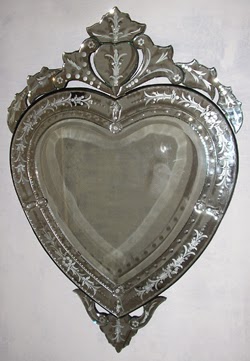
special mirror deluxe


special mirror deluxe, amazing mirror, Awesome Mirror


special mirror deluxe __ A mirror is an object that has at least one of its surfaces being reflective in nature. The first ‘mirrors’ were created using obsidian, a type of volcanic glass, in 6000BC. It is only during the early renaissance period that mirrors as we know them started being made in Europe, whereby glass was coated using a combination of tin and mercury. From then onwards, better quality mirrors have been made in many different styles.

Venetian mirrors are highly regarded works of art that were first produced in early 16th century Venice; they are currently produced on the island of Murano. The origins of the Venetian mirror date back to the Renaissance when Venice already excelled in the production of mirrors and other skills in glassmaking.These mirrors are crafted in fourteen separate stages including faceting of the glass, the engraving of various designs like fruiting vines and scroll motifs, and a traditional silvering process. 

Venetian mirrors are widely regarded as being the most stylish and elegant.Venetian mirrors have the power to enhance the space in an elegant style. This piece of art works like a jewelry for homes. Being the pioneers, Jago Merah Craft produces extremely high quality Venetian mirrors. Popularly known for handcrafted mirrors, brilliance of colours and their precision of engraving, grinding and finishing.

Venetian mirrors are available in various designs and dimensions. A range of furniture and artefacts are also available in Venetian mirrors. With constant efforts, brilliant idea and with the help of technology, Jago Merah Craft glassmakers have come to design and produce the ‘future of Venetian Mirrors’.

Çontact Us
Address : Jln. Bonang 3 RT 2 RW 2, Joyotakan, Serengan, Surakarta, Jawa Tengah, Indonesia, Indonesia 57157Owner : Prima Warsa BaruPhone :  +62 888 6 827 827Email : sales@jagomerahcraft.comFanpage Facebook : jagomerahcraft

Kamis, 04 September 2014

interior glass


interior glass, amazing mirror, Awesome Mirror

interior glass __ Humans, it seems, have always been interested in their image, making crude mirrors of polished tin and other metals. Eventually, in Europe, glass was poured over polished metal to yield better forms of reflectors. During the medieval period, mirrors were considered a tool of the devil, as it was widely thought that Satan was watching from the other side. Glass mirrors disappeared, leaving people to check their appearance in bowls of water or a polished spoon.

As mirrors came back into fashion in the early 15th century, glassmaking and mirror making was burgeoning in Venice, Italy. Nestled among 117 sister islands in the canals of Venice, lies Murano, the birthplace of the famed Venetian Mirror. Murano, in the 15th century was known throughout Europe, for its high quality glassware, Venetian elegance, and beauty. Apart from the detailed craftsmanship of the artisans, the beauty of Venetian glass was attributed to the salt content of the ocean water used, the composition of the Italian silica, and the type of flame used for firing. It is said that the local hardwoods produced the perfect flame for producing exquisite glass pieces. Venetian glass makers fiercely guarded their techniques, but eventually crafty artists from France and Germany infiltrated the artist’s society, returning home to practice their new skills. Still, Venetian glass and mirrors remained a coveted and valuable entity, and one of the most costly items one could own, a true status symbol.

Today, over 500 years later, Venetian mirrors are just as beautiful and stylish, adding a tough of elegance to any home. Venetian mirrors reflect light, and project a lovely Venetian atmosphere. When combined with Venetian furniture, jewel toned drapes and tapestries, and plastered walls, a well-placed Venetian mirror can transform one’s home into a Venetian Renaissance villa. Venetian mirrors can be found in a multitude of styles, from art deco in appearance to those appearing to have been plucked straight from a wealthy Medici Venetian style home in 15th century Italy

Çontact Us
Address : Jln. Bonang 3 RT 2 RW 2, Joyotakan, Serengan, Surakarta, Jawa Tengah, Indonesia, Indonesia 57157Owner : Prima Warsa BaruPhone :  +62 888 6 827 827Email : sales@jagomerahcraft.comFanpage Facebook : jagomerahcraft

Rabu, 03 September 2014

Awesome Mirror


Awesome Mirror, amazing mirror, beautiful mirror

Awesome Mirror __ The Venetian mirror was born on the tiny Italian island of Murano in Venice in the 15th century. Venetian mirrors were painstakingly produced and creating one was a highly involved process. Upon completion, Venetian mirrors were considered to be masterpieces of art; the beauty of Venetian mirrors surpassed the expectations of what a mirror should be.

Even with the arrival of the 16th century, Venetian mirrors were rarities, and the majority of them were custom made for royalty and nobles with voracious appetites for collecting Venetian mirrors. Because the demand for Venetian mirrors surpassed the supply, it became possible to purchase replicas, or "Venetian style mirrors", from dealers who specialized in upscale, valuable objects. Authentic Venetian mirrors were set in precious frames made of beveled glass borders skillfully adjusted securely into place with metal screws and could only be purchased from Venice, Italy. Thoroughly beautiful, genuine Venetian mirrors were difficult to acquire.

Venetian mirrors, the purest mirrors in the world, set the bar very high for other mirror manufacturers. The Venetian mirrors dominated the industry; the authentic Venetian mirrors' popularity wiped out all competitive initiatives from abroad. The quality and the proportion of the Venetian mirrors and their components, combined with the Venetian artists' hundreds of years of crafting experience, made the island of Murano an extremely formidable opponent in the mirror making industry.

One reason the Venetian mirrors were considered so elusively beautiful was due to the top secret manufacturing procedures developed by the Murano glass artisans. The Venetian glassmakers perfected the mystical gold dust technique: they inserted gold leaf into the glass prior to the solidification process, leaving the gold leaf imbedded into the mirror's glass. Protected forever, the gold leaf added color and eternal sparkle to the Venetian mirror.

Another highly protected manufacturing secret was the "Lattimo" process. Lattimo is the name given for the translucent milky-white glass. This technique involves the use of lead to color the glass. Over time, Venetian mirror makers perfected the this process and achieved the skills to necessary to manipulate a variety of effects within the glass. When artfully distributed throughout the glass, the Lattimo process breathed new life into the Venetian mirrors. Through the skillful manipulation of the golden dust technique and the lattimo technique together, the creation of such details like artful borders, flowers, and ribbons are possible

Çontact Us
Address : Jln. Bonang 3 RT 2 RW 2, Joyotakan, Serengan, Surakarta, Jawa Tengah, Indonesia, Indonesia 57157Owner : Prima Warsa BaruPhone :  +62 888 6 827 827Email : sales@jagomerahcraft.comFanpage Facebook : jagomerahcraft