Selasa, 23 September 2014

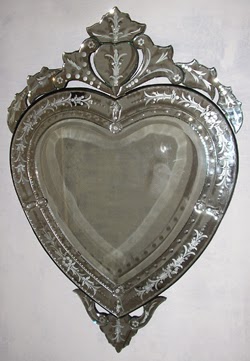
unique mirror frames


unique mirror frames, beautiful mirror, decorative mirror

unique mirror frames __ Venitian glass is a type of collectible glass that is also known by many as Murano glass. It received this name because it was primarily made on the island of Murano in Venice, Italy, during the mid-thirteenth century. Venetian glass is considered an art form and it is much desired and sought by both art and glass collectors. The advent of the Internet has made it possible for people to collect Venetian glass without ever having to leave home.

History
Many glassworkers fled to Venice during the Fourth Crusade when Constantinople was attacked. This happened again in 1453 when Constantinople was taken by the Ottomans. These Venetian artists mastered control over the transparency and color of glass, as well as decorating techniques, by the 16th century and Murano became the reputed center of glassmaking. Glassmaking artisans eventually became the prominent citizens of Murano. Their great glass artistry gained them immunity from prosecution, the availability of prospective brides from Venice, and the permission to wear swords.
Process
Making Venetian glass was a complex process. The glass was made out of silica. The silica turned to liquid when it was exposed to extreme temperatures. As the glass went from a liquid state to a solid state, there was a period of time when the glass completely hardened. It is during this time when the artisans shaped the material. Other materials used to make the glass included nitrate, arsenic and coloring.

Techniques and Colors
Depending on what the artisan wanted to produce, the materials, techniques and colors that were used varied. For instance, an aquamarine glass was created using copper and cobalt compounds added to the mix, and an artist wanting to produce a red piece of glass would use a gold solution. Techniques that were employed in Venetian glass making included gold engraving, enamel painting, engraving, ribbed glass and more.
Tools
Venetian glass artists used tools that were specialized specifically for glass work and art. These tools included pliers and tongs that were used to hand-form the hot glass, an iron rod that where the glass was attached so the artisan could add the finishing touches, cutting clippers and the work bench.
Benefits
Owning a piece of Venetian glass is considered more than just glass collecting, it's a form of art and history collecting. Venetian glass is all about the history of the glass, as it was truly the first type of clear glass that was ever produced.

Çontact Us
Address : Jln. Bonang 3 RT 2 RW 2, Joyotakan, Serengan, Surakarta, Jawa Tengah, Indonesia, Indonesia 57157Owner : Prima Warsa BaruPhone :  +62 888 6 827 827Email : sales@jagomerahcraft.comFanpage Facebook : jagomerahcraft

unique mirrors for bathroom


unique mirrors for bathroom, elegant mirror, glass is awesome

unique mirrors for bathroom __ In 1630 the plague, which had been ravaging populations across Europe since its arrival in Europe in 1348, forced the Venetian authorities to relax their employment laws to ensure that they had the skills and manpower to continue to meet demand. Italy proved particularly susceptible to the plague in part due to the fact it had a different political structure to other European countries. Composed of city-states, each city was left to manage with the devastation of the plague on its own. While they often attempted to work together, the loss of life had a much greater impact on each city than it did on centrally organized nations such as France.

In Venice, eighty thousand lives were lost in just seventeen months. On the 9th November, for example, five hundred and ninety-five people died. These enormous fatalities greatly affected the city and in turn glass production, shipbuilding, lace, wool and silk making. By the time that the plague had run its course, politics in Venice had been forever altered and the Republic was in decline.

To add to Venice’s political and commercial troubles in 1662 Christopher Merrett translated a treatise called the L’Arte Vetraria written in 1612 by Antonio Neri. The subject matter was glass making, and in particular the lead glass used in Venetian enamels, glassware and imitation precious stones. This paved the way for the production of English lead crystal glass by George Ravenscroft. The son of a merchant with close ties to Venice, Ravenscroft was the first to produce clear lead crystal glassware on an industrial scale. With the cultural and financial resources necessary to revolutionise the glass trade, his work allowed England to overtake Venice as the centre of the glass industry in the 18th and 19th centuries.

With the aid of Venetian glassmakers, in particular Seignior Da Costa, and under the auspices of the Glass Sellers Guild, Ravenscroft sought to find an alternative to Venetian cristallo. By 1673 he had overcome all production issues and was granted a protective patent. This gave rise to an intense production of glasses, cups, plates, cups, jugs and bottles all made from lead glass

Çontact Us
Address : Jln. Bonang 3 RT 2 RW 2, Joyotakan, Serengan, Surakarta, Jawa Tengah, Indonesia, Indonesia 57157Owner : Prima Warsa BaruPhone :  +62 888 6 827 827Email : sales@jagomerahcraft.comFanpage Facebook : jagomerahcraft

unique mirrors for dining room


unique mirrors for dining room, amazing mirror, Awesome Mirror

unique mirrors for dining room __ The Venetian mirror was born on the tiny Italian island of Murano in Venice in the 15th century. Venetian mirrors were painstakingly produced and creating one was a highly involved process. Upon completion, Venetian mirrors were considered to be masterpieces of art; the beauty of Venetian mirrors surpassed the expectations of what a mirror should be.

Even with the arrival of the 16th century, Venetian mirrors were rarities, and the majority of them were custom made for royalty and nobles with voracious appetites for collecting Venetian mirrors. Because the demand for Venetian mirrors surpassed the supply, it became possible to purchase replicas, or "Venetian style mirrors", from dealers who specialized in upscale, valuable objects. Authentic Venetian mirrors were set in precious frames made of beveled glass borders skillfully adjusted securely into place with metal screws and could only be purchased from Venice, Italy. Thoroughly beautiful, genuine Venetian mirrors were difficult to acquire.

Venetian mirrors, the purest mirrors in the world, set the bar very high for other mirror manufacturers. The Venetian mirrors dominated the industry; the authentic Venetian mirrors' popularity wiped out all competitive initiatives from abroad. The quality and the proportion of the Venetian mirrors and their components, combined with the Venetian artists' hundreds of years of crafting experience, made the island of Murano an extremely formidable opponent in the mirror making industry.

One reason the Venetian mirrors were considered so elusively beautiful was due to the top secret manufacturing procedures developed by the Murano glass artisans. The Venetian glassmakers perfected the mystical gold dust technique: they inserted gold leaf into the glass prior to the solidification process, leaving the gold leaf imbedded into the mirror's glass. Protected forever, the gold leaf added color and eternal sparkle to the Venetian mirror.

Another highly protected manufacturing secret was the "Lattimo" process. Lattimo is the name given for the translucent milky-white glass. This technique involves the use of lead to color the glass. Over time, Venetian mirror makers perfected the this process and achieved the skills to necessary to manipulate a variety of effects within the glass. When artfully distributed throughout the glass, the Lattimo process breathed new life into the Venetian mirrors. Through the skillful manipulation of the golden dust technique and the lattimo technique together, the creation of such details like artful borders, flowers, and ribbons are possible

Çontact Us
Address : Jln. Bonang 3 RT 2 RW 2, Joyotakan, Serengan, Surakarta, Jawa Tengah, Indonesia, Indonesia 57157Owner : Prima Warsa BaruPhone :  +62 888 6 827 827Email : sales@jagomerahcraft.comFanpage Facebook : jagomerahcraft

Senin, 22 September 2014

duplicate special mirror


duplicate special mirror, amazing mirror, antique mirror

duplicate special mirror __ The mirror features a complex and intriguing history that spans centuries and countries around the globe. The appeal of the mirror has always been clear- it allows the user to see and understand their very own image with every line and blemish on the face reflected, nothing hidden. The capability mirrors must reflect light so perfectly remains unrivalled by some other object. With no reflection inside the mirror, no-one would be proud of their appearance. For this reason capability to reflect light and show appearance so precisely and incredibly, mirrors were widely believed to have magical powers.

A well-known superstition about mirrors is when you smash one, you will have 7 years misfortune. This superstition is believed to have originated from ancient times, when mirrors were thought to be tools of the gods. Mirrors are already coveted since ancient times, since man first saw his reflection inside a pond or lake. In highly cultured aspects of the planet for example Rome and Egypt, they used more crude forms to see a reflection of their image, by making mirrors from materials such as bronze and metal. This was well before the greater advanced and practical glass-making of mirrors.

Glass-making revolutionised how mirrors would work. Before this, the phrase "mirror" represented any material that had been fashioned in a fashion that allowed the consumer to determine their reflection. In present day, when one hears the word "mirror" they associate it with a sheet of glass used as either an object of decoration or as a household object. Mirrors are actually extremely commonplace objects, and you would be hard pushed to locate a home with out them. Mirrors weren't always so common, however. This short article looks at the lengthy history of the mirror, and focuses particularly about the Venetian glassmakers that revolutionised the mirror world by the advance of the Venetian glass mirror.
The history with the glassmaking of mirrors began in 1255 when artisans, the creators of pearls, flasks and glass, settled in Murano, Italy, the birthplace from the now famous Venetian mirror. The draw of Murano was these artisans could protect the tricks of their trades from curious eyes.

Venetian glassmakers hurried to become listed on these phones be within the protection. These glassmakers in Murano produced the world-renowned Venetian glass, that later began producing Venetian mirrors. In the 15th century, glass from Murano was known throughout Europe because of the good quality glassware, beauty and magnificence. Murano glassmakers knew how to make crystalline glass and in addition discovered a completely unique solution to producing large items of glass with unblemished surfaces and highly reflected surfaces, which set them besides other types of glass and glass makers. The beauty of the glass manufactured in Venice was attributed to 3 main things. The initial was the composition with the salt and soda in the Italian silica it absolutely was produced from. The second was the sort of flame used in the firing process and also the third was the salinity from the ocean water used. The many attributes that made Venetian glass so beautiful insured that by the early 1500's, the Venetian glassmaking industry had expanded and virtually destroyed all competition from all around the world. The production of mirrors from Venice began with Venetian glassmaking.

Mirrors came back into fashion at the outset of the 15th century, at a time where mirror and glass making was rapidly evolving in Venice. The Venetian glassmakers were already famed for his or her elegant and delightful design of glass production, therefore at the outset of the 16th century, Venice became a centre of mirror production. Venetian mirror makers used their world-renowned and gorgeous glass to produce authentic Venetian mirrors. These mirrors were considered the purest mirrors on earth, unrivalled by any other material of maker. Through the 16th century (plus a number of centuries after), real Venetian mirrors were very difficult to come across. Small steel mirrors became a day to day object simply because they were available everywhere and were cheap to buy. When it comes to excellence of the mirror though, real Venetian glassmirrors were utterly unrivalled through the unattractive, non extravagant and small steel mirrors. Venetian mirrors were coveted after. These were exported not only all over Europe, but also to the East. Two famous palaces, the Isfahan palace as well as the Lahore palace purchased Venetian mirrors that they proudly hung in their decorative and extravagant palaces.

Çontact Us
Address : Jln. Bonang 3 RT 2 RW 2, Joyotakan, Serengan, Surakarta, Jawa Tengah, Indonesia, Indonesia 57157Owner : Prima Warsa BaruPhone :  +62 888 6 827 827Email : sales@jagomerahcraft.comFanpage Facebook : jagomerahcraft

special compact mirror


special compact mirror, amazing mirror, elegant mirror

special compact mirror __ The history of mirrors starts in the III Century B.C. Most ancient mirrors were made from metal and had a round shape. The back side of the ancient mirrors was beautifully embellished with ornamentation. Mirrors were made from highly polished bronze and silver. The first glass mirrors were invented in I Century by Romans.

From ancient times special qualities had been given to mirrors, that no other object had. The Greek philosopher Socrates gave advice to young men to look at themselves in the mirror, and those who were handsome should focus their life on keeping their souls clean and stay away from the temptations of life that could take them on the wrong path. If a young man would find that he is not handsome, he should compensate for his look from his heart, and get known for doing a lot of good things.

In Medieval period glass mirrors completely disappeared, because during those times religious confessions stated that devil is looking and watching the world from the opposite side of a glass mirrors. Poor fashionable ladies had to use a polished metal mirrors or special water bowls instead of glass mirrors.

Glass mirrors came back only in 13th century. This time they were bended slightly outward. The method of attaching tin to the flat surface of the glass wasn't invented yet. Using available technology master glaziers poured hot tin into glass tubs, and then, after the tin was cold, they would brake it into separate pieces.

Only three centuries later Venetian masters invented a "flat mirror technique". They figured out how to attach tin to a flat glass surface. Venetian masters invented another trick. They created a special reflective mixture in which gold and bronze was added. Because of this "magical" mixture all objects reflecting in the mirrors looked much more beautiful than in reality. The cost of one Venetian mirror then was comparable to the cost of the large naval ship.

In a city of Nuremberg (Germany) in 1373 the first mirror manufacturing plant was open. Mirrors were then aggressively integrated in all aspects of life. In the 16th century mirrors become a part of mysterious rituals and witchcraft. Also, for 200 years mirrors were used by Spanish and French spies for coding and decoding secret messages. This secret coding system was introduced in 15th century by Leonardo da Vinci. The scriptures were coded in "mirror reflection" and without the mirror it was impossible to read the message. Mirrors were part of another big invention of the time - the periscope. The opportunity to discreetly spy on ones enemy by using a system of interactive mirrors saved a lot of lives during wars. During the famous Thirty Year war, mirrors were used by all sides to blind the enemy during military actions with bright reflection of sun light. It was very hard to take aim when your eyes are blinded by thousands of tiny mirrors.

Starting with 12th century no respectful lady left her house without a small mirror. Handheld mirrors and pears mirrors became a must have items for every woman. Ladies wore gold embellished mirrors on a chain around their neck or waist, inserted mirrors in to the fens. Mirrors were treated just like precious jewelry, and were incased in specially crafted exotic materials like turtle shell or elephant bone frames. Some of the mirror's frames were made from gold or silver with an elegant miniature engravings.

In the 15th century the Venetian Island of Murano become the center of glass making and was known as the "Isle of Glass". They officially created the "Council of Ten" with a special mission of vigorously protecting the secrets of there glass making techniques. Masters glassmakers were secretly transported to the island of Murano undercover as a firefighters. The "Council of Ten" generously supported glassmakers and at the same time kept them isolated from the rest of the world. The profits from the mirror making monopoly were too large to take any risks. European monarchs at whatever it cost tried to find out the Venetian glassmaking secrets. They accomplish this goal in 17th century, when Colbert (the minister of Ludwig XIV) bribed with gold three Murano masters and transported them in to France.

The French happened to be a good students, and very quickly they not only mastered Murano glass making techniques, but invented they're own. While mirror making techniques used by Venetian masters was based on a glassblowing, French masters started manufacturing mirrors using casting techniques based on pouring glass into the cast molds. The glass was poured directly from the dome into perfectly smooth surface of the cast mold, and then, as the glass was cooling, it was rolled with the special rollers achieving a perfect consistency and smoothness of material. Immediately after this invention, in Versailles the construction of the Mirrors Gallery began. The Mirrors Gallery was 220 feet (73 meters) long and embellished with 306 huge mirrors.


On the end of 16th century, following the high fusion style, French queen Maria De Medici decided to create for herself a Mirrored office. For this matter, 119 mirrors was purchased from Venice. Maybe because her purchase was so large, or for some other reason, Venetian masters created a special gift for the queen of France - a unique large mirror generously incrusted with precious stones. Till this day this mirror is preserved and kept in the Louvre in Paris.

Mirrors become a popular valuable collectibles among royals. English King Hendry VIII and the King of France Francis I were the most known mirrors collectors of there time. Trying to catch up with kings, nobles in France had to have an extravagant mirrors in any cost. There is a knowing facts that some of them had to sell one of they residents in order to purchase a single beautiful mirror. Mirrors were extremely costly. For example one mirror cost more than an Rafael's painting of the same size.
In 17th century Russia, mirrors were considered a sin. In 1666 the Orthodox Church in prohibited the possession of mirrors by its priests. From this time on a lot of superstitions surrounded mirrors. Those superstitions seems to us funny  and naive, but back than people took it very seriously. Breaking a mirror, for example, was sign of bad lack for seven years. That is why when a mirror was broken the person who broke it should apologies to the mirror for clumsiness, and had to carefully and respectfully bury it. Solders took mirrors-talismans to reflect away death.

Mirrors have had a long and colorful journey throughout history. In our days there is no home without a mirror. Mirrors have become part of our everyday routine, often unappreciated. We always should remember "reflect" and respect the historical aspects of mirrors and appreciate more not only mirror's functionality, but incredible esthetical value of the mirrors

Çontact Us
Address : Jln. Bonang 3 RT 2 RW 2, Joyotakan, Serengan, Surakarta, Jawa Tengah, Indonesia, Indonesia 57157Owner : Prima Warsa BaruPhone :  +62 888 6 827 827Email : sales@jagomerahcraft.comFanpage Facebook : jagomerahcraft

special mirror caravan spiegels


special mirror caravan spiegels, amazing mirror, Awesome Mirror

special mirror caravan spiegels __ Venetian glass production dates back to 982, with a document that makes reference to a bottle maker called Dominicus Phiolarius (from it. fiole: bottles). In 1090 a Petrus Flabianicus was also mentioned. But already in 450, in the Venetian lagoon and in the surroundings there were glass-workers that produced the tesseras for the mosaics of the local churches. However, no Venetian glass preceding the XVth century has arrived to us, while the glass of the Islamic art arrived to Venice from Constantinopole after the IVth Crusade (1204), is kept in the Treasure of St. Mark. 

The development of Venetian glass factories was quick: in 1271 a first “capitulary” was introduced to regulate the art of glass making. The importation of foreign glass into Venice was forbidden and foreign glass makers were prevented from working in the city. The Guild of glass makers was under the authority and protection of the Republic, and their formulas were highly valued and kept strictly secret. These “partite” or recipes, were handed down from father to son and transcribed into secret books. In fact these secret techniques were of such great importance as to make the difference between the glass produced in Venice and that of other European glass centres. 

In 1291 in order to counter the risk of fire, all of the furnaces of Venice were moved to the island of Murano, where the art of glass has been kept alive (till today). In 1295 another strict "capitulary" was issued: in it the emigration of Venetian glass makers abroad was forbidden. 

The continuous development of glass industry and art in Murano required a modification of the statutes of 1271 which led up to the “Mariegola dell’arte dei verieri da Muran”, in 1441. Venice got an indirect knowledge of “enamelled” glass of Syrian origins that influenced enormously the creation of those goblets and stem glasses with enamel decoration that date back to the XIVth and XVth century, like Aldrevandin’s glass and the one kept in Switzerland in the Cathedral of Coira. 

The decoration of Venetian glass was also influenced by the craftsmen arrived from the Middle East, after the Fall of Damascus in 1400 and of Constantinopoles in 1435, which closed definively the history of the Roman Empire.Towards the half of the XVth century, above all because of these external influences, the production of glass with dark colours decorated and painted with bright coloured enamel was successful. 

At the mid of the XVth century, a perfect clear, flawless glass was produced by Angelo Barovier which became called “vetro cristallo” or "cristallo veneziano". The chemical composition of this kind of glass allowed complex and long works typical of the Murano tradition. The Venetian factories that made goblets, glasses, dishes, bowls etc., exported their objects all around Europe, where the elegance and lightness of this material was appreciated.

Venice kept protecting the secret of the production of glass and of crystal but, notwithstanding it, the Republic partially lost its monopoly at the end of the XVIth century, because of some glass makers (e.g. Verzelini) who let the secret be known in many European countries. Venice reacted to this competition producing more and more original objects, with fancier and more exuberant decorations: glasses and goblets with handles and decorated by figures of animals, “acquerecce” and “versatoi” (jugs and ewers) ship-shaped, entirely made of glass, fruit-stands supported and decorated by serpents, dragons, sea-horses, dolphins.

In the XVIth century the quest for new materials led to the realization of an opaque white glass called "lattimo" (from it. latte: milk). Subsequently the "filigree" and the "retorti" glass were created; in 1527 Filippo Catani patented the "zanfirico" (or "retorti") filigree with milky canes included in cristal and twisted as spiral. Those techniques represent a simbol of the classic Murano glass till today. 

Towards the end of the XVIIth century and in the XVIIIth, the production of mirrors imposed itself: mirrors were all pretty small, because they were made out of sheets of blown glass, unlike those of other countries which were melted in big surfaces and then polished. These mirrors were decorated with cut figures or enriched by big glass frames or with coloured glass applications. 

In the XVIIIth century there was the rise of Giuseppe Briati’s industry: he created the a ciocche chandelier. As consequence of the political collapse with the fall of the Republic, the economic crisis and the foreign dominations, between the end of the XVIIIth century and the mid of XIXth didn’t produce anything new in the artistic field, and the glass factories were content with the production of beads for necklaces and rosaries.

It is in 1840 Pietro Bigaglia breathed new life into the art glass production, also creating the innovating millefiori paperweight. With the end of the XIXth century, Murano re-started pratice of art glass, reviving the tecniques of its past. During this part of the century was born a new generation of master glassmakers focused to re-lerning the manual and technical skills which until just a few years before might seemed lost. 

In the following century some glass factories led by craftsmen or industrialists like Venini, Barovier, Salviati, Toso, Cenedese, Barbini (and many others)., abandoned the repetitive production, which used to copy the shapes of the past, to create a big variety of artistic glass upon new designs, thanks to innovative contemporary artists.

Çontact Us
Address : Jln. Bonang 3 RT 2 RW 2, Joyotakan, Serengan, Surakarta, Jawa Tengah, Indonesia, Indonesia 57157Owner : Prima Warsa BaruPhone :  +62 888 6 827 827Email : sales@jagomerahcraft.comFanpage Facebook : jagomerahcraft

Minggu, 21 September 2014

special mirror for bathroom


special mirror for bathroom, Awesome Mirror, glass is awesome

special mirror for bathroom __ The Venetian mirror has never lost its allure. These masterpieces were first produced in Venice at the beginning of the sixteenth century, and to this day beautiful Venetian glass mirrors continue to be lovingly made by jagomerah craft, for discerning clientele all over the world. A handful of small family run companies take pride in the production of these works of art and timeless elegance

Venetian MirrorVenetian MirrorSideboard JagoMerah mirrorVenetian MirrorSconceThe JagoMerahglass mirror’s worldwide reputation is rightly deserved, as until the Venetian glass masters discovered the secrets to producing perfectly smooth mirror panes, the world had to make do with mirrors no more than a few inches wide!Finally it was the JagoMerah glass masters who figured out how to would blow cylinders of crystal clear glass, which were then cut open and laid flat to cool.

These were known as “Quadri”, or squares seen here. This was only the beginning of a long and laborious process: The sheets of glass would them be transported to the mirror makers in Solo Indonesia, who would then spend weeks hand polishing the glass to a beautiful mirror finish, the quality and uniformity was unrivalled in the rest of the world.. Finally to give reflection tin foil was backed on to the glass using mercury. Dangerous mercury gave way to precious silver, the backing that is still used on today’s genuine JagoMerah glass mirrors.

Often the mirrors are adorned with beautiful hand made JagoMerah and the glass when engraved, is done so by master engravers using a diamond wheel.At Venetian Mirror Centre we are proud to offer you the worlds largest selection of authentic Murano glass mirrors and Venetian glass furniture. Our styles range from sixteenth century models to elegant “art deco” offerings. All our designs can be reproduced with either a new, or aged “antique” finish to suit your brief.We also supply a carefully chosen, affordable.

Çontact Us

Address : Jln. Bonang 3 RT 2 RW 2, Joyotakan, Serengan, Surakarta, Jawa Tengah, Indonesia, Indonesia 57157Owner : Prima Warsa BaruPhone :  +62 888 6 827 827Email : sales@jagomerahcraft.comFanpage Facebook : jagomerahcraft