Jumat, 26 September 2014

interesting news mirror


interesting news mirror, duplicate special mirror, interesting mirror designs, special mirror caravan spiegels

interesting news mirror __ The history of mirrors starts in the III Century B.C. Most ancient mirrors were made from metal and had a round shape. The back side of the ancient mirrors was beautifully embellished with ornamentation. Mirrors were made from highly polished bronze and silver. The first glass mirrors were invented in I Century by Romans.

From ancient times special qualities had been given to mirrors, that no other object had. The Greek philosopher Socrates gave advice to young men to look at themselves in the mirror, and those who were handsome should focus their life on keeping their souls clean and stay away from the temptations of life that could take them on the wrong path. If a young man would find that he is not handsome, he should compensate for his look from his heart, and get known for doing a lot of good things. 

In Medieval period glass mirrors completely disappeared, because during those times religious confessions stated that devil is looking and watching the world from the opposite side of a glass mirrors. Poor fashionable ladies had to use a polished metal mirrors or special water bowls instead of glass mirrors.

Glass mirrors came back only in 13th century. This time they were bended slightly outward. The method of attaching tin to the flat surface of the glass wasn't invented yet. Using available technology master glaziers poured hot tin into glass tubs, and then, after the tin was cold, they would brake it into separate pieces.

Only three centuries later Venetian masters invented a "flat mirror technique". They figured out how to attach tin to a flat glass surface. Venetian masters invented another trick. They created a special reflective mixture in which gold and bronze was added. Because of this "magical" mixture all objects reflecting in the mirrors looked much more beautiful than in reality. The cost of one Venetian mirror then was comparable to the cost of the large naval ship.

In a city of Nuremberg (Germany) in 1373 the first mirror manufacturing plant was open. Mirrors were then aggressively integrated in all aspects of life. In the 16th century mirrors become a part of mysterious rituals and witchcraft. Also, for 200 years mirrors were used by Spanish and French spies for coding and decoding secret messages. This secret coding system was introduced in 15th century by Leonardo da Vinci. The scriptures were coded in "mirror reflection" and without the mirror it was impossible to read the message. Mirrors were part of another big invention of the time - the periscope. The opportunity to discreetly spy on ones enemy by using a system of interactive mirrors saved a lot of lives during wars. During the famous Thirty Year war, mirrors were used by all sides to blind the enemy during military actions with bright reflection of sun light. It was very hard to take aim when your eyes are blinded by thousands of tiny mirrors.

Starting with 12th century no respectful lady left her house without a small mirror. Handheld mirrors and pears mirrors became a must have items for every woman. Ladies wore gold embellished mirrors on a chain around their neck or waist, inserted mirrors in to the fens. Mirrors were treated just like precious jewelry, and were incased in specially crafted exotic materials like turtle shell or elephant bone frames. Some of the mirror's frames were made from gold or silver with an elegant miniature engravings. 

In the 15th century the Venetian Island of Murano become the center of glass making and was known as the "Isle of Glass". They officially created the "Council of Ten" with a special mission of vigorously protecting the secrets of there glass making techniques. Masters glassmakers were secretly transported to the island of Murano undercover as a firefighters. The "Council of Ten" generously supported glassmakers and at the same time kept them isolated from the rest of the world. The profits from the mirror making monopoly were too large to take any risks. European monarchs at whatever it cost tried to find out the Venetian glassmaking secrets. They accomplish this goal in 17th century, when Colbert (the minister of Ludwig XIV) bribed with gold three Murano masters and transported them in to France.

The French happened to be a good students, and very quickly they not only mastered Murano glass making techniques, but invented they're own. While mirror making techniques used by Venetian masters was based on a glassblowing, French masters started manufacturing mirrors using casting techniques based on pouring glass into the cast molds. The glass was poured directly from the dome into perfectly smooth surface of the cast mold, and then, as the glass was cooling, it was rolled with the special rollers achieving a perfect consistency and smoothness of material. Immediately after this invention, in Versailles the construction of the Mirrors Gallery began. The Mirrors Gallery was 220 feet (73 meters) long and embellished with 306 huge mirrors.


On the end of 16th century, following the high fusion style, French queen Maria De Medici decided to create for herself a Mirrored office. For this matter, 119 mirrors was purchased from Venice. Maybe because her purchase was so large, or for some other reason, Venetian masters created a special gift for the queen of France - a unique large mirror generously incrusted with precious stones. Till this day this mirror is preserved and kept in the Louvre in Paris. 

Mirrors become a popular valuable collectibles among royals. English King Hendry VIII and the King of France Francis I were the most known mirrors collectors of there time. Trying to catch up with kings, nobles in France had to have an extravagant mirrors in any cost. There is a knowing facts that some of them had to sell one of they residents in order to purchase a single beautiful mirror. Mirrors were extremely costly. For example one mirror cost more than an Rafael's painting of the same size.

In 17th century Russia, mirrors were considered a sin. In 1666 the Orthodox Church in prohibited the possession of mirrors by its priests. From this time on a lot of superstitions surrounded mirrors. Those superstitions seems to us funny  and naive, but back than people took it very seriously. Breaking a mirror, for example, was sign of bad lack for seven years. That is why when a mirror was broken the person who broke it should apologies to the mirror for clumsiness, and had to carefully and respectfully bury it. Solders took mirrors-talismans to reflect away death.

Mirrors have had a long and colorful journey throughout history. In our days there is no home without a mirror. Mirrors have become part of our everyday routine, often unappreciated. We always should remember "reflect" and respect the historical aspects of mirrors and appreciate more not only mirror's functionality, but incredible esthetical value of the mirrors

Çontact Us
Address : Jln. Bonang 3 RT 2 RW 2, Joyotakan, Serengan, Surakarta, Jawa Tengah, Indonesia, Indonesia 57157Owner : Prima Warsa BaruPhone :  +62 888 6 827 827Email : sales@jagomerahcraft.comFanpage Facebook : jagomerahcraft

Kamis, 25 September 2014

interesting mirror frames


interesting mirror frames, glass is awesome, duplicate special mirror

interesting mirror frames __ The mirror features a complex and intriguing history that spans centuries and countries around the globe. The appeal of the mirror has always been clear- it allows the user to see and understand their very own image with every line and blemish on the face reflected, nothing hidden. The capability mirrors must reflect light so perfectly remains unrivalled by some other object. With no reflection inside the mirror, no-one would be proud of their appearance. For this reason capability to reflect light and show appearance so precisely and incredibly, mirrors were widely believed to have magical powers.

A well-known superstition about mirrors is when you smash one, you will have 7 years misfortune. This superstition is believed to have originated from ancient times, when mirrors were thought to be tools of the gods. Mirrors are already coveted since ancient times, since man first saw his reflection inside a pond or lake. In highly cultured aspects of the planet for example Rome and Egypt, they used more crude forms to see a reflection of their image, by making mirrors from materials such as bronze and metal. This was well before the greater advanced and practical glass-making of mirrors. Glass-making revolutionised how mirrors would work. Before this, the phrase "mirror" represented any material that had been fashioned in a fashion that allowed the consumer to determine their reflection. In present day, when one hears the word "mirror" they associate it with a sheet of glass used as either an object of decoration or as a household object. Mirrors are actually extremely commonplace objects, and you would be hard pushed to locate a home with out them. Mirrors weren't always so common, however. This short article looks at the lengthy history of the mirror, and focuses particularly about the Venetian glassmakers that revolutionised the mirror world by the advance of the Venetian glass mirror.

The history with the glassmaking of mirrors began in 1255 when artisans, the creators of pearls, flasks and glass, settled in Murano, Italy, the birthplace from the now famous Venetian mirror. The draw of Murano was these artisans could protect the tricks of their trades from curious eyes. Venetian glassmakers hurried to become listed on these phones be within the protection. These glassmakers in Murano produced the world-renowned Venetian glass, that later began producing Venetian mirrors. In the 15th century, glass from Murano was known throughout Europe because of the good quality glassware, beauty and magnificence. Murano glassmakers knew how to make crystalline glass and in addition discovered a completely unique solution to producing large items of glass with unblemished surfaces and highly reflected surfaces, which set them besides other types of glass and glass makers. The beauty of the glass manufactured in Venice was attributed to 3 main things. The initial was the composition with the salt and soda in the Italian silica it absolutely was produced from. The second was the sort of flame used in the firing process and also the third was the salinity from the ocean water used. The many attributes that made Venetian glass so beautiful insured that by the early 1500's, the Venetian glassmaking industry had expanded and virtually destroyed all competition from all around the world. The production of mirrors from Venice began with Venetian glassmaking.

Mirrors came back into fashion at the outset of the 15th century, at a time where mirror and glass making was rapidly evolving in Venice. The Venetian glassmakers were already famed for his or her elegant and delightful design of glass production, therefore at the outset of the 16th century, Venice became a centre of mirror production. Venetian mirror makers used their world-renowned and gorgeous glass to produce authentic Venetian mirrors. These mirrors were considered the purest mirrors on earth, unrivalled by any other material of maker. Through the 16th century (plus a number of centuries after), real Venetian mirrors were very difficult to come across. Small steel mirrors became a day to day object simply because they were available everywhere and were cheap to buy. When it comes to excellence of the mirror though, real Venetian glassmirrors were utterly unrivalled through the unattractive, non extravagant and small steel mirrors. Venetian mirrors were coveted after. These were exported not only all over Europe, but also to the East. Two famous palaces, the Isfahan palace as well as the Lahore palace purchased Venetian mirrors that they proudly hung in their decorative and extravagant palaces.


Çontact Us
Address : Jln. Bonang 3 RT 2 RW 2, Joyotakan, Serengan, Surakarta, Jawa Tengah, Indonesia, Indonesia 57157Owner : Prima Warsa BaruPhone :  +62 888 6 827 827Email : sales@jagomerahcraft.comFanpage Facebook : jagomerahcraft
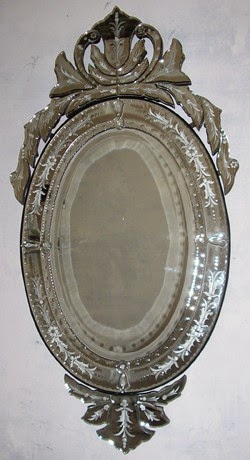
interesting mirror facts


interesting mirror facts, duplicate special mirror, interesting mirror designs

interesting mirror facts __ The first mirrors used by people were most likely pools of dark, still water, or water collected in a primitive vessel of some sort. The earliest manufactured mirrors were pieces of polished stone such as obsidian, a naturally occurring volcanic glass. Examples of obsidian mirrors found in Anatolia (modern-day Turkey) have been dated to around 6000 BC. Polished stone mirrors from Central and South America date from around 2000 BC onwards. Mirrors of polished copper were crafted in Mesopotamia from 4000 BC, and in ancient Egypt from around 3000 BC. In China, bronze mirrors were manufactured from around 2000 BC, some of the earliest bronze and copper examples being produced by the Qijia culture. Mirrors made of other metal mixtures (alloys) such as copper and tin speculum metal may have also been produced in China and India. Mirrors of speculum metal or any precious metal were hard to produce and were only owned by the wealthy. 

Metal-coated glass mirrors are said to have been invented in Sidon (modern-day Lebanon) in the first century AD, and glass mirrors backed with gold leaf are mentioned by the Roman author Pliny in his Natural History, written in about 77 AD. The Romans also developed a technique for creating crude mirrors by coating blown glass with molten lead. 

Parabolic mirrors were described and studied in classical antiquity by the mathematician Diocles in his work On Burning Mirrors. Ptolemyconducted a number of experiments with curved polished iron mirrors, and discussed plane, convex spherical, and concave spherical mirrors in his Optics. Parabolic mirrors were also described by the physicist Ibn Sahl in the 10th century, and Ibn al-Haythamdiscussed concave and convex mirrors in both cylindrical and spherical geometries, carried out a number of experiments with mirrors, and solved the problem of finding the point on a convex mirror at which a ray coming from one point is reflected to another point By the 11th century, clear glass mirrors were being produced in Moorish Spain. In China, people began making mirrors with the use of silver-mercury amalgams as early as 500 AD.  Some time during the earlyRenaissance, European manufacturers perfected a superior method of coating glass with a tin-mercury amalgam. The exact date and location of the discovery is unknown, but in the 16th century, Venice, a city famed for its glass-making expertise, became a centre of mirror production using this new technique. Glass mirrors from this period were extremely expensive luxuries.  The Saint-Gobain factory, founded by royal initiative in France, was an important manufacturer, and Bohemian and German glass, often rather cheaper, was also important.

The invention of the silvered-glass mirror is credited to German chemist Justus von Liebig in 1835.[18] His process involved the deposition of a thin layer of metallic silver onto glass through the chemical reduction of silver nitrate. This silvering process was adapted for mass manufacturing and led to the greater availability of affordable mirrors. Nowadays, mirrors are often produced by the wet deposition of silver (or sometimes aluminum via vacuum deposition)[19] directly onto the glass substrate.

Çontact Us
Address : Jln. Bonang 3 RT 2 RW 2, Joyotakan, Serengan, Surakarta, Jawa Tengah, Indonesia, Indonesia 57157Owner : Prima Warsa BaruPhone :  +62 888 6 827 827Email : sales@jagomerahcraft.comFanpage Facebook : jagomerahcraft

interesting mirror designs


interesting mirror designs, special compact mirror, special mirror for bathroom

interesting mirror designs __ Other types of reflecting device are also called "mirrors".
Acoustic mirrors are passive devices used to reflect and perhaps to focus sound waves. Acoustic mirrors were used for selective detection of sound waves, especially during World War II. They were used for detection of enemy aircraft prior to the development ofradar. Acoustic mirrors are used for remote probing of the atmosphere; they can be used to form a narrow diffraction-limited beam.[49]They can also be used for underwater imaging.
Active mirrors are mirrors that amplify the light they reflect. They are used to make disk lasers.[50] The amplification is typically over a narrow range of wavelengths, and requires an external source of power.
Atomic mirrors are devices which reflect matter waves. Usually, atomic mirrors work at grazing incidence. Such mirrors can be used for atomic interferometry and atomic holography. It has been proposed that they can be used for non-destructive imaging systems withnanometer resolution.[51]
Cold mirrors are dielectric mirrors that reflect the entire visible light spectrum, while efficiently transmitting infrared wavelengths. These are the converse of hot mirrors.
Corner reflectors use three flat mirrors to reflect light back towards its source, they may also be implemented with prisms that reflect using total internal reflection that have no mirror surfaces. They are used for emergency location, and even laser ranging to the Moon.
Hot mirrors reflect infrared light while allowing visible light to pass. These can be used to separate useful light from unneeded infrared to reduce heating of components in an optical device. They can also be used as dichroic beamsplitters. (Hot mirrors are the converse of cold mirrors.)
Metallic reflectors are used to reflect infrared light (such as in space heaters or microwaves).
Non-reversing mirrors are mirrors that provide a non-reversed image of their subjects.
X-ray mirrors produce specular reflection of X-rays. All known types work only at angles near grazing incidence, and only a small fraction of the rays are reflected.[52] See also X-ray optics.

Çontact Us
Address : Jln. Bonang 3 RT 2 RW 2, Joyotakan, Serengan, Surakarta, Jawa Tengah, Indonesia, Indonesia 57157Owner : Prima Warsa BaruPhone :  +62 888 6 827 827Email : sales@jagomerahcraft.comFanpage Facebook : jagomerahcraft

Rabu, 24 September 2014

unique mirror ideas


unique mirror ideas, duplicate special mirror, special compact mirror

unique mirror ideas __ The 18th century saw the seeds of decay start to grow in Murano. Worker unrest at the closure of furnaces saw unemployment increase. As we have seen the decline in the importance of Venice as a trading and political power also meant it was less able to police its restrictive rules designed to protect its glass industry. Occupation by the French under Napoleon Bonaparte in 1797 and then the subsequent transfer of Venice to the Hapsburg Empire in 1814 brought the Venetian Republic to an end.

Glass production in Murano suffered enormously under Austrian rule as regulations were introduced which overtly favoured the other major glass making in the Empire, namely Bohemia. This saw Bohemian crystal, thicker, heavier and often engraved, grow in popularity to the point of rivalling Murano glass’ popularity the century before. Taxation of raw materials, limited markets, and the abolishment of the Guild in 1805 saw a sharp decline in the number of furnaces – down to 24 in 1800 which further shrank to 13 by 1820. Master glass makers were now scattered across Europe and the remaining Murano producers chose to focus on the decorative beads, small bottles, and trinkets needed for overseas colonial trade.

This decline did not bottom out until the mid 19th century with the establishment of a new family glass furnace on Murano, called Fratelli Tosco in 1854. This was followed by the arrival on the island of an industrial lawyer by the name of Antonio Salviati in 1859 who set up another furnace. Fratelli initially focused on utilitarian everyday glassware, whilst Salviati focused on producing glass tiles for both the repair of Venetian mosaics and the creation of new ones. The master glassblowers who gravitated towards these two firms were among the many who had kept the glassblowing traditions alive, maintaining the art of their fathers and grandfathers, rediscovering the ancient glass making techniques, including Lorenzo Radi, who had devoted considerable efforts in the 1850s to resurrecting some of the sophisticated glassmaking techniques from Murano’s first heyday in the 1400s. This steady reversal in fortunes was further aided by Vincenzo Zanetti who developed the Glass Museum of Murano, which in reality was more of a school which alongside the new furnaces slowly began reintroducing lost glass blowing techniques.

The output from the Salviati factory gained international recognition at both the London World Exhibition in 1862 and the Universal Exposition in Paris in 1867, in large part due to Antonio’s marketing abilities. At the London event his firm captured international attention with its prize-winning display with Salviati boldly using the occasion to present products in chalcedony glass, a medium that Radi had revived in 1856.

This recognition of artistic merit was paralleled by commercial success, and the firm soon inaugurated a sales office in London in 1868. These initiatives opened new markets for Venetian glass beyond those in the Hapsburg Empire. Eventually, Venice was freed from the Austrians in 1866 and became part of the Kingdom of Italy, and gradually the glassmaking industry of Murano began to expand commercially and many new innovative firms were established such as Fratelli Barovier and Francesco Ferro & Figlio.
Beyond drawing on the centuries old traditions of glass making in Murano, including the rediscovery of murrine, a glass making technique from Roman times, new influences were needed to re-inspire the industry. The Murano glass workers were constrained by the fact that they had always worked within an artisan tradition rather than an artistic one. This inspiration needed began with the art nouveau movement at the end of the centre, but was further fuelled and redirected by the avant garde reaction to this movement within the European art world. These new ideas and innovations from across Europe were evident for all to see at the 1895 Venice Biennale.

Çontact Us
Address : Jln. Bonang 3 RT 2 RW 2, Joyotakan, Serengan, Surakarta, Jawa Tengah, Indonesia, Indonesia 57157Owner : Prima Warsa BaruPhone :  +62 888 6 827 827Email : sales@jagomerahcraft.comFanpage Facebook : jagomerahcraft

unique mirror shapes


unique mirror shapes, duplicate special mirror, special compact mirror

unique mirror shapes __ Jago Merah Craft could be a home décor company that helps its patrons get fashionable home décor furnishings, fixtures and fittings to measure stylish. With its large and numerous assortment of ornamental and trendy Venetian wall mirrors, you'll undoubtedly be able to embellish the category and outlook of your home décor. With the exception of being useful as a mirror, these masterpieces additionally facilitate boring and dingy rooms look brighter, and smaller rooms look additional spacious. What additional, you'll be able to realize several alternative things like toilet vanities, furnishings for your living and eating area, a piece of furniture, hearth and mantels, home and gift accessories etc at this on-line home décor store. 

If you're yearning for elegant mirrors, you'll be able to take you decide from the wide repertoire of Venetian wall mirrors on supply to allow your hall, bedroom, toilet ANd lounge space an updated and splendid look. Because of the experience of practice craftsmen UN agency have used materials like metal, glass, wood and bronze to supply baroque and flamboyant Venetian wall mirrors, you'll be able to currently offer your interiors an aesthetic look while not a lot of a problem. Perhaps you currently curious to grasp additional concerning the kinds of Venetian wall mirrors that you simply should buy from Jago Merah Craft. So, allow us to explore some lovely Venetian wall mirrors in this store:

Batique (Venetian) Mirror is venetian mirror combined with traditional Indonesian batik culture .This model is more complex than regular venetian mirror, It has plenty of cutting mirrors.

Modern (Venetian) mirror is venetian mirror combined with pop art. This model is more simple than regular venetian mirror. And traditional ornament will not be found.

18th and 19th Century (Venetian) mirror is a venetian mirror combined with chemically aging technique, the mirror will not be clear like another mirror, it looks naturally antique and old. It will not look fake antique. It will bring beautiful classic memory of 18th or 19th century in to your room.

Antique Venetian Wall Mirrors: If you're keen on classical and heirloom designs, Antique Venetian wall mirrors are a unit one thing that you simply can relish. Some notable ones offered reception Living style, that area unit price mentioning, embody ornamental Crafts Hand engraved Venetian Mirrors, ornamental Crafts Antiqued Glass Venetian Mirror, Uttermost Felice Venetian style ornamental Wall Mirror, Italian Venetian style Mirror Antiqued gold foil and four additional.

Çontact Us
Address : Jln. Bonang 3 RT 2 RW 2, Joyotakan, Serengan, Surakarta, Jawa Tengah, Indonesia, Indonesia 57157Owner : Prima Warsa BaruPhone :  +62 888 6 827 827Email : sales@jagomerahcraft.comFanpage Facebook : jagomerahcraft

unique mirror wall art


unique mirror wall art, duplicate special mirror, special mirror for bathroom

unique mirror wall art __ Humans, it seems, have always been interested in their image, making crude mirrors of polished tin and other metals. Eventually, in Europe, glass was poured over polished metal to yield better forms of reflectors. During the medieval period, mirrors were considered a tool of the devil, as it was widely thought that Satan was watching from the other side. Glass mirrors disappeared, leaving people to check their appearance in bowls of water or a polished spoon.

As mirrors came back into fashion in the early 15th century, glassmaking and mirror making was burgeoning in Venice, Italy. Nestled among 117 sister islands in the canals of Venice, lies Murano, the birthplace of the famed Venetian Mirror. Murano, in the 15th century was known throughout Europe, for its high quality glassware, Venetian elegance, and beauty. Apart from the detailed craftsmanship of the artisans, the beauty of Venetian glass was attributed to the salt content of the ocean water used, the composition of the Italian silica, and the type of flame used for firing. It is said that the local hardwoods produced the perfect flame for producing exquisite glass pieces.

Venetian glass makers fiercely guarded their techniques, but eventually crafty artists from France and Germany infiltrated the artist’s society, returning home to practice their new skills. Still, Venetian glass and mirrors remained a coveted and valuable entity, and one of the most costly items one could own, a true status symbol.

Today, over 500 years later, Venetian mirrors are just as beautiful and stylish, adding a tough of elegance to any home. Venetian mirrors reflect light, and project a lovely Venetian atmosphere. When combined with Venetian furniture, jewel toned drapes and tapestries, and plastered walls, a well-placed Venetian mirror can transform one’s home into a Venetian Renaissance villa. Venetian mirrors can be found in a multitude of styles, from art deco in appearance to those appearing to have been plucked straight from a wealthy Medici Venetian style home in 15th century Italy

Çontact Us
Address : Jln. Bonang 3 RT 2 RW 2, Joyotakan, Serengan, Surakarta, Jawa Tengah, Indonesia, Indonesia 57157Owner : Prima Warsa BaruPhone :  +62 888 6 827 827Email : sales@jagomerahcraft.comFanpage Facebook : jagomerahcraft