Tampilkan postingan dengan label decorative mirror stickers. Tampilkan semua postingan

Rabu, 12 November 2014

Special Mirror furniture


Special Mirror furniture, decorative mirror stickers, duplicate special mirror

Special Mirror furniture __ The Venetian mirror was born on the tiny Italian island of Murano in Venice in the 15th century. Venetian mirrors were painstakingly produced and creating one was a highly involved process. Upon completion, Venetian mirrors were considered to be masterpieces of art; the beauty of Venetian mirrors surpassed the expectations of what a mirror should be.

Even with the arrival of the 16th century, Venetian mirrors were rarities, and the majority of them were custom made for royalty and nobles with voracious appetites for collecting Venetian mirrors. Because the demand for Venetian mirrors surpassed the supply, it became possible to purchase replicas, or "Venetian style mirrors", from dealers who specialized in upscale, valuable objects. Authentic Venetian mirrors were set in precious frames made of beveled glass borders skillfully adjusted securely into place with metal screws and could only be purchased from Venice, Italy. Thoroughly beautiful, genuine Venetian mirrors were difficult to acquire.

Special Mirror furniture __ Venetian mirrors, the purest mirrors in the world, set the bar very high for other mirror manufacturers. The Venetian mirrors dominated the industry; the authentic Venetian mirrors' popularity wiped out all competitive initiatives from abroad. The quality and the proportion of the Venetian mirrors and their components, combined with the Venetian artists' hundreds of years of crafting experience, made the island of Murano an extremely formidable opponent in the mirror making industry.

Special Mirror furniture __ One reason the Venetian mirrors were considered so elusively beautiful was due to the top secret manufacturing procedures developed by the Murano glass artisans. The Venetian glassmakers perfected the mystical gold dust technique: they inserted gold leaf into the glass prior to the solidification process, leaving the gold leaf imbedded into the mirror's glass. Protected forever, the gold leaf added color and eternal sparkle to the Venetian mirror.

Another highly protected manufacturing secret was the "Lattimo" process. Lattimo is the name given for the translucent milky-white glass. This technique involves the use of lead to color the glass. Over time, Venetian mirror makers perfected the this process and achieved the skills to necessary to manipulate a variety of effects within the glass. When artfully distributed throughout the glass, the Lattimo process breathed new life into the Venetian mirrors. Through the skillful manipulation of the golden dust technique and the lattimo technique together, the creation of such details like artful borders, flowers, and ribbons are possible.

Çontact Us
Address : Jln. Bonang 3 RT 2 RW 2, Joyotakan, Serengan, Surakarta, Jawa Tengah, Indonesia, Indonesia 57157Owner : Prima Warsa BaruPhone :  +62 888 6 827 827Email : sales@jagomerahcraft.comFanpage Facebook : jagomerahcraft

Minggu, 28 September 2014

decorative mirror hooks


decorative mirror hooks, decorative mirror stickers, duplicate special mirror

decorative mirror hooks __ The Venetian mirror has never lost its allure. These masterpieces were first produced in Venice at the beginning of the sixteenth century, and to this day beautiful Venetian glass mirrors continue to be lovingly made by jagomerah craft, for discerning clientele all over the world. A handful of small family run companies take pride in the production of these works of art and timeless elegance.

Venetian Mirror Venetian Mirror Sideboard Jago Merah mirror Venetian Mirror Sconce The Jago Merah glass mirror’s world wide reputation is rightly deserved, as until the Venetian glass masters discovered the secrets to producing perfectly smooth mirror panes, the world had to make do with mirrors no more than a few inches wide!Finally it was the JagoMerah glass masters who figured out how to would blow cylinders of crystal clear glass, which were then cut open and laid flat to cool.

These were known as “Quadri”, or squares seen here. This was only the beginning of a long and laborious process: The sheets of glass would them be transported to the mirror makers in Solo Indonesia, who would then spend weeks hand polishing the glass to a beautiful mirror finish, the quality and uniformity was unrivalled in the rest of the world.. Finally to give reflection tin foil was backed on to the glass using mercury. Dangerous mercury gave way to precious silver, the backing that is still used on today’s genuine JagoMerah glass mirrors.

Often the mirrors are adorned with beautiful hand made JagoMerah and the glass when engraved, is done so by master engravers using a diamond wheel.At Venetian Mirror Centre we are proud to offer you the worlds largest selection of authentic Murano glass mirrors and Venetian glass furniture. Our styles range from sixteenth century models to elegant “art deco” offerings. All our designs can be reproduced with either a new, or aged “antique” finish to suit your brief.We also supply a carefully chosen, affordable

Çontact Us
Address : Jln. Bonang 3 RT 2 RW 2, Joyotakan, Serengan, Surakarta, Jawa Tengah, Indonesia, Indonesia 57157Owner : Prima Warsa BaruPhone :  +62 888 6 827 827Email : sales@jagomerahcraft.comFanpage Facebook : jagomerahcraft

decorative mirrors for bathrooms


decorative mirrors for bathrooms, decorative mirror stickers, interesting mirror bedroom

decorative mirrors for bathrooms __ In ancient times, people used obsidian stones to make mirrors. These stones when highly polished were able to reflect with a great clarity. Through times, as civilization evolved, technology did too. Gradually, people started to use gold, silver, and aluminum to create mirrors in the similar manner they used the obsidian stone. In about 1600 AD, the silvering process, which became the most popular way to make mirrors, was introduced and it is used even today.

In classical antiquity, solid metal (bronze, later silver) was used to manufacture mirrors and mirrors were too expensive; they were also prone to corrosion.

Venetian glassmakers introduced the process of making mirrors out of plate in 16th century. They covered the back of the glass with mercury to obtain near-perfect and undistorted reflection.

Today, the mirror substrate is first shaped, then polished and cleaned, and finally covered.
The method of making mirrors is very simple. Mirrors are made by applying a reflective coating to a glass sheets. Glass is a major mirror component due to its transparency, ease to fabrication, rigidity, hardness, and ability to take a smooth finish but it is not very good material for reflection. Materials which are commonly used are metal coatings such as silver, gold or chrome. Present-day glass mirrors are most often coated with non-toxic silver or aluminum.

It is very important that the glass is polished to perfection, any dip or impurity left on glass would made waves in the mirror, which would cause distortion of the image reflected.

There are many methods of glass to be coated with the chosen metal to form a mirror. In industrial productions, glass is coated by bringing the metal to a boil in special chambers and then metal is condensed on the glass sheet to form a thin but perfect coating of the metal. The back surface of the mirror is painted to prevent damage to the metal coating.

Mirrors have to be specially designed in order to become effective, and the glass sheets that are used must be flat and durable. For household use, the thickness of the mirror is very important, with its strength increasing proportionately to its thickness. For heavy-duty mirrors and mirrors used in scientific research, the surface needs to be designed in particular way to retain uniformity while adding a curvature. This process gives the mirror the ability to focus as well as reflect light. The kind of coating to be used is specified by the mirror design. Durability and reflectivity are the most important characteristics in the choice of the coating.
An important part of the manufacturing process is the quality control of mirrors. Inspection of the mirror's surface is generally performed using the naked eye or a microscope in order to check if there are any scratches 

Çontact Us
Address : Jln. Bonang 3 RT 2 RW 2, Joyotakan, Serengan, Surakarta, Jawa Tengah, Indonesia, Indonesia 57157Owner : Prima Warsa BaruPhone :  +62 888 6 827 827Email : sales@jagomerahcraft.comFanpage Facebook : jagomerahcraft
decorative mirror stickers


decorative mirror stickers, duplicate special mirror, interesting mirror bedroom

decorative mirror stickers __ A mirror is an object that has at least one of its surfaces being reflective in nature. The first ‘mirrors’ were created using obsidian, a type of volcanic glass, in 6000BC. It is only during the early renaissance period that mirrors as we know them started being made in Europe, whereby glass was coated using a combination of tin and mercury. From then onwards, better quality mirrors have been made in many different styles.

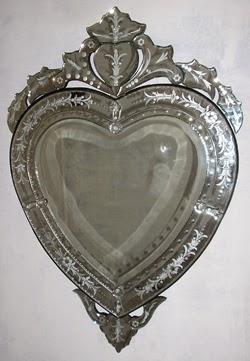
Venetian mirrors are highly regarded works of art that were first produced in early 16th century Venice; they are currently produced on the island of Murano. The origins of the Venetian mirror date back to the Renaissance when Venice already excelled in the production of mirrors and other skills in glassmaking.These mirrors are crafted in fourteen separate stages including faceting of the glass, the engraving of various designs like fruiting vines and scroll motifs, and a traditional silvering process. 

Venetian mirrors are widely regarded as being the most stylish and elegant.Venetian mirrors have the power to enhance the space in an elegant style. This piece of art works like a jewelry for homes. Being the pioneers, Jago Merah Craft produces extremely high quality Venetian mirrors. Popularly known for handcrafted mirrors, brilliance of colours and their precision of engraving, grinding and finishing.

Venetian mirrors are available in various designs and dimensions. A range of furniture and artefacts are also available in Venetian mirrors. With constant efforts, brilliant idea and with the help of technology, Jago Merah Craft glassmakers have come to design and produce the ‘future of Venetian Mirrors’

Çontact Us
Address : Jln. Bonang 3 RT 2 RW 2, Joyotakan, Serengan, Surakarta, Jawa Tengah, Indonesia, Indonesia 57157Owner : Prima Warsa BaruPhone :  +62 888 6 827 827Email : sales@jagomerahcraft.comFanpage Facebook : jagomerahcraft